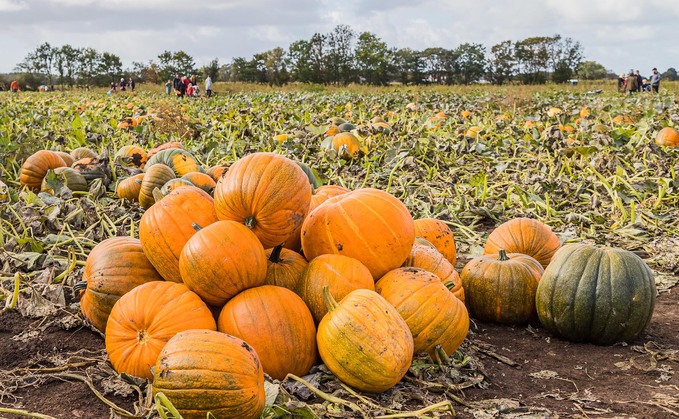
Farmers have reported that the wet July and August, but with enough sunny intervals, have seen pumpkin crops thrive. A warm September and early October helped ripen the fruits at the right time too, With between 10 and 15 million pumpkins grown and harvested in the UK every year, most pumpkins are larger than usual.
Experts at Business Waste are concerned this growth will lead to more pumpkins being wasted. Already around 24 million pumpkins are sold in the UK every year to celebrate Halloween with 18,000 tons of pumpkins ending up in landfill.
Mark Hall, representative for waste management company Business Waste says: "More than half of Brits who buy pumpkins once a year just to make a jack-o'-lantern aren't aware that they can eat and use the fruit. Instead, they scoop out the insides and chuck it straight in the bin, meaning thousands of tons of edible pumpkins go to waste."
How much extra waste food will bigger pumpkins create?
There are no exact figures about how much bigger pumpkins are compared to last year. However, as 18,000 tons of pumpkins are thrown out normally in a year, even a 1 per cent increase in size could lead to significant amounts of extra waste:
- 1 per cent increase in pumpkin size - 180 extra tonnes - the weight of 30 elephants
- 5 per cent increase in pumpkin size - 900 extra tonnes - the weight of 150 elephants
- 10 per cent increase in pumpkin size - 1,800 extra tonnes - the weight of 300 elephants
The average supermarket purchased pumpkin has a diameter of 15 to 25cm and weighs between 2-3kg. Medium pumpkins range in size from 60-80cm in diameter and can weigh as much as 9kg.