



The importance of colostrum feeding in the hours following birth, whether that is suckling from the ewe or administering a high-quality colostrum replacer, should not be underestimated by producers this season. This was a key message from a recent webinar on managing surplus lambs from colostrum through to weaning.
Dr Katie Denholm, vet and senior academic clinician at the University of Glasgow, said: "Colostrum is the perfect cocktail of goodies for newborn lambs and offers far more than just good antibodies.
"Lambs are effectively a blank slate following birth, as the placental structure of the ewe is different to other animals and prevents large antibody molecules moving across the placenta to the foetus. This means that if high quality colostrum is not consumed by the lamb during the first 24 hours of life, there is an increased risk of mortality, illness and low growth rates."
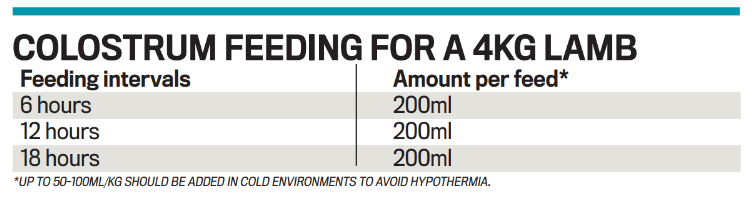
Dr Denholm suggested that colostrum, whether it is from the ewe or a high-quality colostrum replacer, should deliver a minimum of 50g/litre of IgG (the main antibody in colostrum) for the lamb. Hygiene of colostrum is also crucial as bacteria will block the uptake of antibodies into the lamb's gut. The regularity of feeding is also important for absorption.
She said: "The lamb's gut closes and becomes impermeable to antibody molecules after 24 hours. Therefore, feeding colostrum after this period will result in no absorption of antibodies into the blood stream, which is why the initial hours following birth are so crucial to long term productivity of these lambs."

Along with quality, Dr Denholm also highlighted the importance of a lambing environment that promotes colostrum intake.
She said: "It is also worth considering the feeding situation to ensure the lambs can consume the colostrum without being subjected to stress. A quiet environment when administering colostrum will lower stress levels in newborn lambs and it is worth ensuring the feeding method, whether via tube or a bottle, is the right choice for your lambing system."
READ NOW: Top tips for lambing time: Small changes add up
Hygiene is imperative
Dr Jessica Cooke, R&D manager at Lamlac said: "Attention to detail through to weaning at 35 days is critical, but the first 24 hours requires closer monitoring to minimise setbacks in later life. For surplus lambs, moving onto a high-quality milk replacer, fed warm until day eight before reducing the temperature to encourage the lamb to search for other source of nutrition, is key."
Several trials have shown that reducing the temperature of the milk replacer or mixing and feeding it cold from day eight, promotes lambs to search for other sources of food and start the weaning transition naturally.
A 2025 trial at Harper Adams University showed that lambs fed cold milk from day eight achieved an average body weight at weaning (35 days) of 15kg, ranging from 10-19kg, with an average daily live weight gain up to weaning of 332g/day.
Dr Cooke and Dr Denholm both stressed that good hygiene should be the primary focus and that even the highest quality products will be less effective when hygiene and environmental factors are compromised.
Dr Denholm said: "Hot water, washing up liquid and various sized scrubbing brushes should be used to clean feeding equipment immediately after use, before storing it safely. Washing up liquid will help break down the fatty scum left by colostrum and reduce the transfer of bacteria."

Stacey Bruna, Lamlac's south west business manager, said the same attention to detail should be applied to producers using feeding buckets or automatic feeders.
She said: "These machines may save a significant amount of labour time, but meticulous maintenance is still paramount. The various pipes transferring the milk should be cleaned daily using hot water. A clean environment, with deep straw bedding and draught free, will support lambs to deliver excellent daily live weight gains."
Weaning criteria
Surplus lambs should be kept in pens of no more than 25 lambs, with 8-10 lambs per feeding teat. Producers should be focussing on achieving the weaning criteria around 35 days of age, and this preparation can begin from day eight.
Dr Cooke said: "We can actively prevent post-weaning weight loss by introducing creep from day eight, so lambs become used to it and can start to nibble. Roughage, in the form of straw, should also be available in racks to promote rumen development."
Dr Cooke highlighted that reducing the temperature of the milk replacer will also help with transition. She said: "Weight loss post-weaning is linked to low creep intake and a poorly developed rumen prior to weaning. Cold mixing and feeding of a high-quality milk replacer, means lambs will actively seek other sources of nutrition that will support digestive development."
Dr Cooke also advised that if lambs have met the weaning criteria of enough creep intake for a 10-day period and weighing 2.5 times their birth weight, weaning abruptly was the best method as leaving milk replacer available beyond 35 days can risk digestive upset and bloat.
She suggested that transitioning to grass should be done several days after weaning to avoid too many changes at once.
"Removing milk replacer is a big change and we want to make this as seamless as possible," she said. "Waiting several days before turning lambs out to grass will allow them to consume creep to support digestive development before getting used to grass."
READ NOW: Ensure ram longevity post-tupping


