



If there is a theme running through this year's variety plots, it is the search for resilience. Whether the challenge is disease pressures, changing regulations, tighter input budgets or increasingly unpredictable weather, crop breeders are seemingly focusing their breeding plans on delivering varieties that help growers manage risk without sacrificing crucial outputs.
On the DSV stand, visitors can explore the plant breeder's latest wheat and oilseed rape genetics, with the newly announced Group 1 milling wheat Arlington among the headline attractions, generating interest in combining breadmaking quality with a strong agronomic package.
READ MORE: Public backs glyphosate ban as 60,000 sign petition
In oilseed rape, DSV will be highlighting Dompteur, which is currently at the top of the latest AHDB Recommended List for yield.
Alexander Doering, managing director at DSV UK, says, "Growers are facing significant changes in the way crops will need to be managed over the next decade.
"Whether it is the future of glyphosate, increasing disease pressure or more volatile weather, variety selection is becoming one of the most important decisions on farm."
As the crop continues to divide opinion amid industry debates over the use of glyphosate as a pre-harvest desiccant, varieties that combine early maturity, dry down more quickly, and deliver greater harvest resilience are attracting growing interest.
Robust genetics
Breeders Senova will be presenting what it describes as ‘compromise-free' genetics across cereals and pulses. The company believes that recent changes in disease pressure, including the breakdown of the Yr15 resistance gene, have highlighted the importance of robust genetics. For growers facing tighter margins and volatile markets, reducing production risk is becoming just as important as chasing headline yields.
George Goodwin, managing director at Senova, says, "Given the current headwinds in arable farming and the volatile situation in the Gulf, most growers are looking for varieties that help them to manage risk, not add to it," he says.
"That's why we are delighted to have new wheat varieties coming through which don't have the disease susceptibility or weak straw compromises that currently exist. Our wheats work in lower input regimes, are easier to manage and suit the end user."
The winter wheat candidates to be exhibited include NOS Beast, Girton and Gibson. According to Senova, the varieties are likely to attract interest as each targets a slightly different market opportunity, but all have been selected for strong disease resistance and agronomic reliability.
Could you be taking a shed home from Cereals?
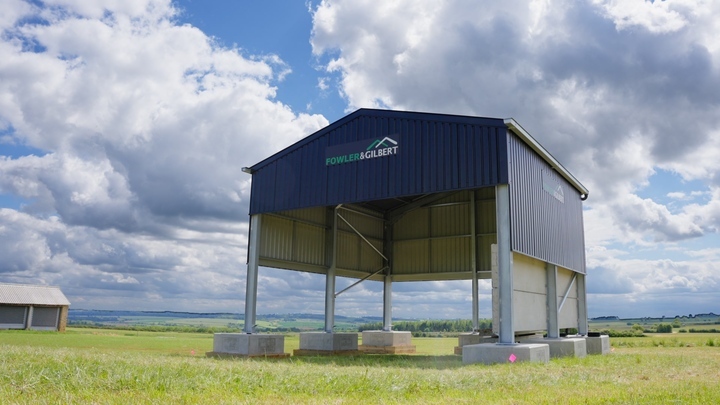
With a combined package worth over £26,000, Shropshire-based steel-framed building manufacturer Fowler and Gilbert has launched a competition allowing entrants to win an 8 x 8-meter steel-framed building, along with pad foundations and building erection.
Lee Gilbert, managing director, says the company is celebrating 15 years of manufacturing, winning the King's Award for Enterprise in early May, and being nominated for the ‘Company of the Year' at the Shropshire Business Awards.
He says, "Having exhibited at The Cereals Event for the past 15 years, we wanted to give back to our customers, new and old, to say a bit of a thank you."
The exact building that will be won is fully erected at Diddly Squat Farm for use as the business show exhibition, but after the event it will be dismantled and delivered to the winner's address.
For full terms and conditions and to enter the competition, visit: flgb.co.uk
New tools for an increasingly complex challenge
Crop protection remains a rapidly evolving area of arable farming, and The Cereals Event provides an opportunity to see not only the products available but also some of the chemistry that could shape future disease, weed and pest management programmes.
Making its first appearance as an exhibitor at Cereals, ADAMA is placing considerable emphasis on two upcoming products that could prove significant for UK growers.
READ MORE: Talking Roots with Darryl Shailes
The first is Gilboa, a new fungicide based on flumetylsulforim. Gilboa has been classified by the Fungicide Resistance Action Committee (FRAC) as a Group 32 fungicide, targeting nucleic acid metabolism through a biochemical pathway not previously utilised by cereal fungicides.
"Gilboa represents the next generation of fungicides and is therefore an incredibly exciting and important new molecule for the crop protection industry," says Jonny Oosthuizen, portfolio and campaign at ADAMA.
"We're privileged to be leading the next generation of fungicides by introducing the first DRSP (DNA/RNA Synthesis Proposed) mode of action in cereals, and we look forward to sharing more about how Gilboa's game-changing molecule works at our ADAMA in Action trial sites across the UK in the summer."
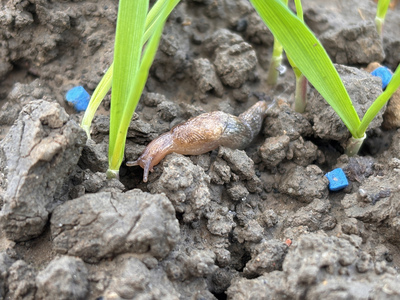
The company's second focus is Ferrabait, a new slug pellet due for launch this autumn. Slugs remain one of the most costly and difficult pests facing UK arable growers, particularly following oilseed rape and during autumn establishment periods. Ferrabait is based on a novel active ingredient, Feralla, and is designed to rapidly terminate feeding while maintaining strong pellet durability under challenging field conditions.
Practical innovation moves centre stage
Technology at Cereals is increasingly about practical solutions that can be integrated into everyday farm operations rather than futuristic concepts.
One company illustrating that trend is Scott Country International, which will demonstrate thermal imaging and drone technologies designed to support both productivity and wildlife protection
At Cereals, visitors will be able to see DJI Enterprise drone systems and Nocpix thermal technology while discussing how the equipment can be used across a range of agricultural applications.
READ MORE: Can agri tech cut fungicide costs without hitting yield?
Data management and decision support will be the focus on the Hutchinsons stand. The Omnia platform is now used across more than two million hectares of UK farmland and has become one of the most widely adopted digital management tools in the sector.
Visitors will be able to see live demonstrations covering rotational planning, field records, crop performance analysis and business reporting, with the aim not simply to collect data, but to turn information into practical management decisions.
Farmer-led innovation
The British On-Farm Innovation Network has built its reputation around farmer-led research, bringing together growers, scientists and technology companies to tackle real-world challenges under commercial farming conditions.
A major focus this year will be the SLIMERS project, a three-year programme investigating improved approaches to slug management.
Prof Keith Walters, Harpers Adams University researcher says: "One of the strengths of the SLIMERS project is the close partnership between farmers and scientists. By combining farmers' observations with scientific analysis, we've developed our slug prediction maps, which have the potential to transform how and where control measures are applied. I'm looking forward to introducing these brand-new concepts to visitors at Cereals."
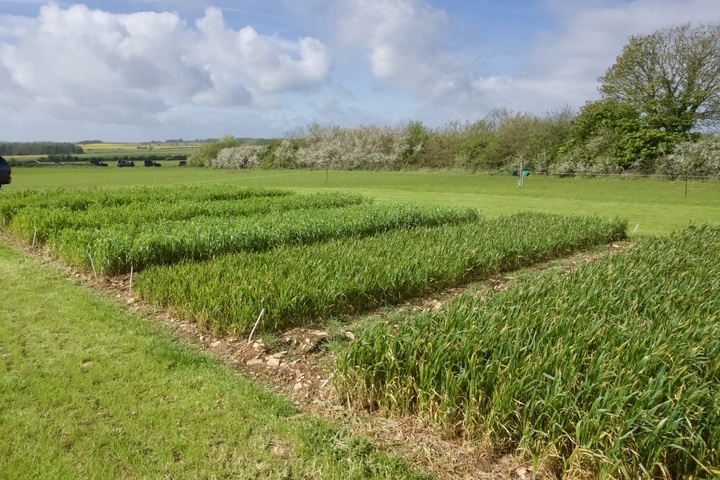
Another attraction will be BOFIN's demonstration plots, featuring six novel wheat varieties currently undergoing evaluation through the network's farmer trial programme.
Arable Farmer of the Year
Do you know someone who is an expert in their field and deserves to be named 'Arable Farmer of the Year'? NOMINATE them now for a BRITISH FARMING AWARD.


