



Our second winter ready case study video, Benefits of being winter ready, highlights how preparing for winter is not just about getting through the wettest months. It's also about improving efficiency and resilience across the whole farming year. In the video agronomist Graham shows how practical changes to slurry and yard management delivered lasting business benefits for Tom.
Getting winter ready should not be seen as a short-term compliance job. For many livestock businesses, improving slurry storage and yard infrastructure can bring benefits that last well beyond the wettest months of the year.
Our main aim working with Tom was to ensure compliance and reduce winter pressure, but the wider benefits to his business soon became clear. Better storage has allowed slurry to be used when crops and grass need it most, rather than when tanks are full and the weather is against the farm.
Regulation as a business tool
Farm rules are often viewed mainly through the lens of compliance, but regulation can also support long-term business resilience.
Farming Rules for Water cover slurry, manure and fertiliser use and are designed to protect watercourses from nutrient losses that can damage river and stream ecosystems. But clear regulation also helps create a level playing field, ensuring all farm businesses meet the same basic standards.
If you are investing in infrastructure, compliance can provide a more secure platform for the future. A well-designed slurry system, with enough storage and clean water kept out of the dirty water system, can support a farm for decades.
That gives businesses more room to plan, expand and manage risk.
Making slurry work harder
One of the biggest gains comes from being able to apply slurry at the right time.
When storage is limited, slurry is often spread because the store is full, not because the crop needs it. It is non-compliant and can lead to poor nutrient use, increased run-off risk, soil damage and greater reliance on bought in fertiliser later in the season.
By increasing storage capacity, Tom's farm has been able to hold slurry until conditions are right. This means applying organic nutrients in spring and during the growing season, when grass is better placed to take them up.
Graham highlighted that nutrient uptake from spring slurry applications can be significantly higher than autumn applications because growing conditions are more favourable. In the video, he emphasises that timing applications to match crop demand is one of the biggest opportunities farmers have to improve nutrient efficiency and reduce losses.
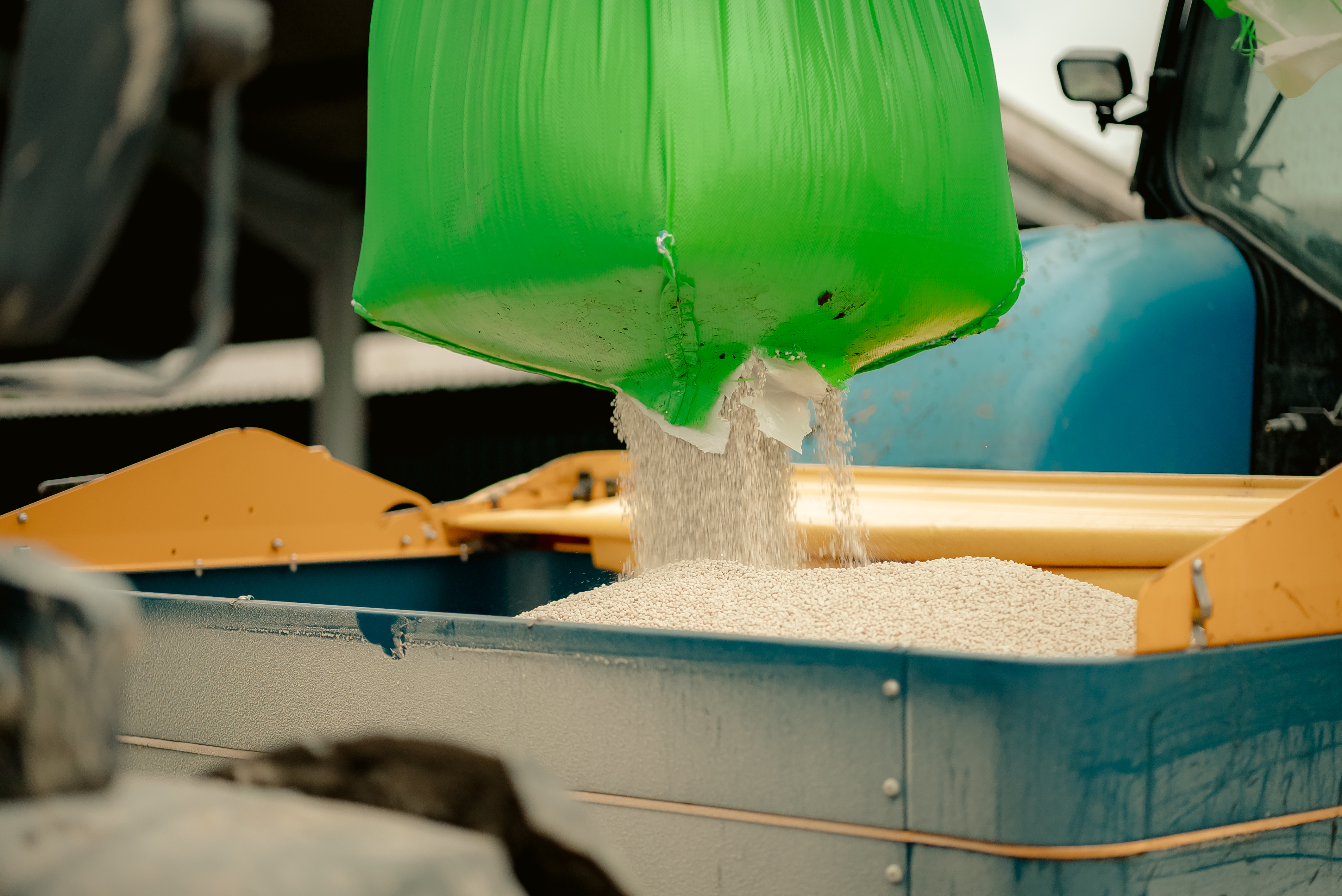
That has a direct business benefit. More nutrients used by the crop means less money spent replacing them with bagged fertiliser.
Cutting hidden costs
The benefits of better slurry management are not limited to fertiliser savings.
Spreading at the wrong time can mean more tractor hours, higher fuel use, extra labour and increased wear on machinery. It can also increase soil compaction if heavy kit is used in wet conditions.
Compacted soils are less productive, drain less effectively and are more prone to run-off. Over time, this can reduce grass growth and make land harder to manage.
If you have enough storage, you have more flexibility. Slurry can be applied when field conditions are suitable, soil damage risk is lower and crop demand is higher.
Start with the simple fixes
Major investment will not be possible for every farm, particularly while input costs, market volatility and weather risks continue to put pressure on livestock businesses.
But even smaller changes can still make a difference.
Keeping clean water out of slurry and dirty water systems should be one of the first areas to check. Damaged guttering, poor drainage, uncovered yards and misdirected roof water can all add unnecessary volume to stores.
Simple improvements such as repairing gutters, redirecting clean water, roofing high risk areas and reviewing yard drainage can help reduce storage pressure.
For some farms, these changes may provide enough additional capacity to ease winter risk. For others, they can be the first step before a larger storage project.
Get advice first
Don't be afraid to ask for help if you are concerned about slurry storage or winter spreading pressure. Tom benefited from working with our senior environment officer Rob and was able to put together plans that ensured compliance from the start.
Early advice can help you understand what is needed, what options are available and how to prioritise improvements. It can also help avoid rushed decisions when stores are already full and spreading conditions are poor.
Catchment Sensitive Farming and the Farming Advice Service can also provide support on nutrient planning, infrastructure, slurry and manure management, and possible grant routes.
With winter weather becoming less predictable, planning ahead is increasingly important. Farms that understand their storage capacity, know where clean water is entering the system and have a nutrient plan in place will be in a stronger position.
A year-round opportunity
Being winter ready is not only about avoiding pollution risk during wet weather. Done well, it can help farmers improve nutrient efficiency, cut fertiliser bills, protect soil structure and reduce operational pressure throughout the year.
For Tom's dairy business, the investment has created more certainty and allowed slurry to be treated as a valuable resource rather than a problem to be dealt with when storage runs short.
That lesson applies widely across the livestock sector. Winter pressure may be the trigger for action, but the benefits of better slurry planning can be felt all year round.
Further Information and Support
If you are worried about storage, spreading plans or what the rules mean for your farm, speak to your local Environment Agency agriculture officer or contact the Environment Agency National Customer Contact Centre:
Telephone: 03708 506 506
Email: [email protected]
Farming Advice Service: https://www.farmingadviceservice.org.uk/technical-article/environment-agency-winter-ready-cab-card

Catchment Sensitive Farming: https://www.gov.uk/guidance/catchment-sensitive-farming


