

The Clarkson's Farm team
SERIES 1 (2021)
1. The first day at the wheel
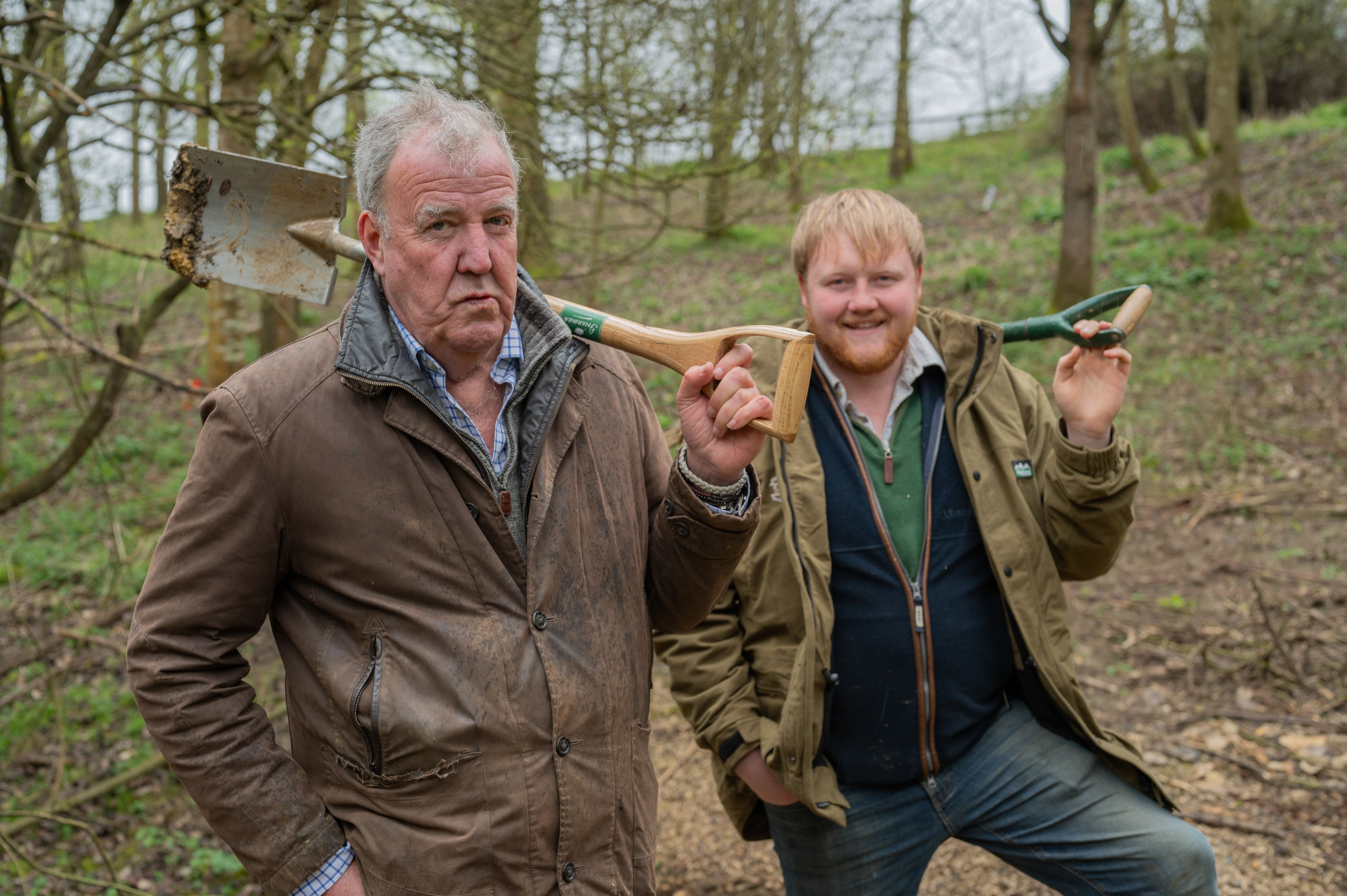
Jeremy Clarkson's introduction to the Fendt tractor — and to Kaleb Cooper, the young Chipping Norton-born operator who would rapidly establish himself as the more competent of the two — set the tone for everything that followed. A TV star, a large machine, and very limited understanding of either soil type or basic agronomy. Farmers watching will have recognised the situation immediately.
2. The sheep decision
Against sound advice, Jeremy acquired a flock of North Country Mules. The subsequent lambing chaos, assisted by shepherdess Ellen Helliwell and veteran sheep man Kevin Harrison, gave the nation a useful introduction to why livestock farmers earn every penny. The ewes, predictably, did not cooperate.
3. The farm shop opens
The decision to sell produce directly to the public sounded straightforward. It was not. Planning constraints, council objections, and the logistics of retail proved as unpredictable as the weather. That said, the shop found its customers — and established Diddly Squat as a destination that many a travelling public would descend upon in subsequent series.
4. Harvest time
The first harvest represented a genuine reckoning. Months of effort, an entire growing season of anxiety and a yield that reminded viewers — and Jeremy — that British arable farming is not a guaranteed enterprise. Gerald Cooper, who has been harvesting the land at Diddly Squat for more than 50 years, was on hand to ensure it was done properly.
5. The bees
An attempt to address declining insect populations by installing hives, digging a pond and thinning woodland showed a more thoughtful side to proceedings. Ukrainian beekeeper Viktor Zaichenko provided the expertise. Clarkson provided the enthusiasm, which is not quite the same thing.
READ NOW: Release date announced for Clarkson's Farm Season 5
SERIES 2 (2023)
6. The restaurant venture
The opening of the farm-to-fork restaurant demonstrated both the public's appetite for local food and the considerable patience required when dealing with local authorities. It sparked briefly the most talked-about planning dispute in the Cotswolds, which suggests viewers found the council's position as frustrating as the farming community did.
7. Kaleb's promotion
The decision to appoint Kaleb as farm manager was, by any measure, the correct one. His forthright assessment of Jeremy's capabilities — delivered with the directness that comes naturally to a young man who has rarely ventured beyond Banbury — provided the series with much of its best material.
8. Charlie's London trip
Agronomist Charlie Ireland and Kaleb travelling to the capital for what was described as 'a very important meeting' offered a sharp contrast between farming life and the wider world. Neither appeared entirely comfortable. Farmers everywhere will have understood.
SERIES 3 (2024)
9. The restaurant closure
Returning to find the council had shut the restaurant was a blow that many in the farming community recognised as familiar territory: considerable investment, hard work, genuine product — and then paperwork. The subsequent scramble for alternative income streams was entirely relatable.
10. The pigs arrive
The introduction of Sandy and Black pigs gave the series some of its most honest footage. Jeremy and Lisa discovered just how demanding pig farming can be, and the animals proved considerably more strong-willed than anticipated. As with the sheep before them, the livestock won most of the arguments.
11. Gerald's diagnosis
When it emerged that Gerald, the farm's stone wall specialist, had been diagnosed with prostate cancer, the tone shifted appropriately. It was a reminder that behind the comedy is a community of real working people, and that farming takes its toll.
12. The mushroom enterprise
Jeremy's mushroom empire began to appear all-consuming as he struggled to keep on top of his newest venture. For those familiar with the realities of farm diversification — the optimism, the investment, the administrative burden — it had the ring of painful truth.
13. Andy Cato and regenerative farming
The arrival of Groove Armada's Andy Cato to advocate for regenerative agriculture brought a genuinely useful discussion about soil health and farming methods to a very large audience. Whatever one's view of the approach, the conversation was worth having.
SERIES 4 (2025)
14. Kaleb goes on tour
With Kaleb off doing a nationwide tour and Lisa working on a new product line, Jeremy was left to run the farm alone — a situation that unfolded roughly as expected. His replacement, Harriet Cowan, a full-time nurse and farmer from Derbyshire, brought her own perspective, including a TikTok following that baffled both Jeremy and Charlie in equal measure.
15. The tractor problem
Much of the humour in Series 4 came from the aging Lamborghini tractor finally giving out, leaving Jeremy in urgent need of a replacement. Like a farmer in a well-stocked machinery dealership, he tried everything available before selecting, inevitably, another Lamborghini — this time with more than 340 horsepower. His ploughing, it should be noted, remained a work in progress.
WATCH NOW:
16. The pub search
Jeremy and Lisa toured a succession of quintessential Cotswolds pubs, from heritage properties with real character to structures in a state of considerable disrepair. For anyone who has ever worried about the loss of rural pubs, it was instructive viewing.
17. The cattle market
Jeremy attending his first beef cattle market was the sort of footage that rewards patient viewers. The rhythms of the ring, the shorthand between farmers, the unspoken knowledge of those who have been doing it for years — and one major TV personality trying to keep up — made for good television and, more usefully, good advocacy.
18. The Farmer's Dog opens
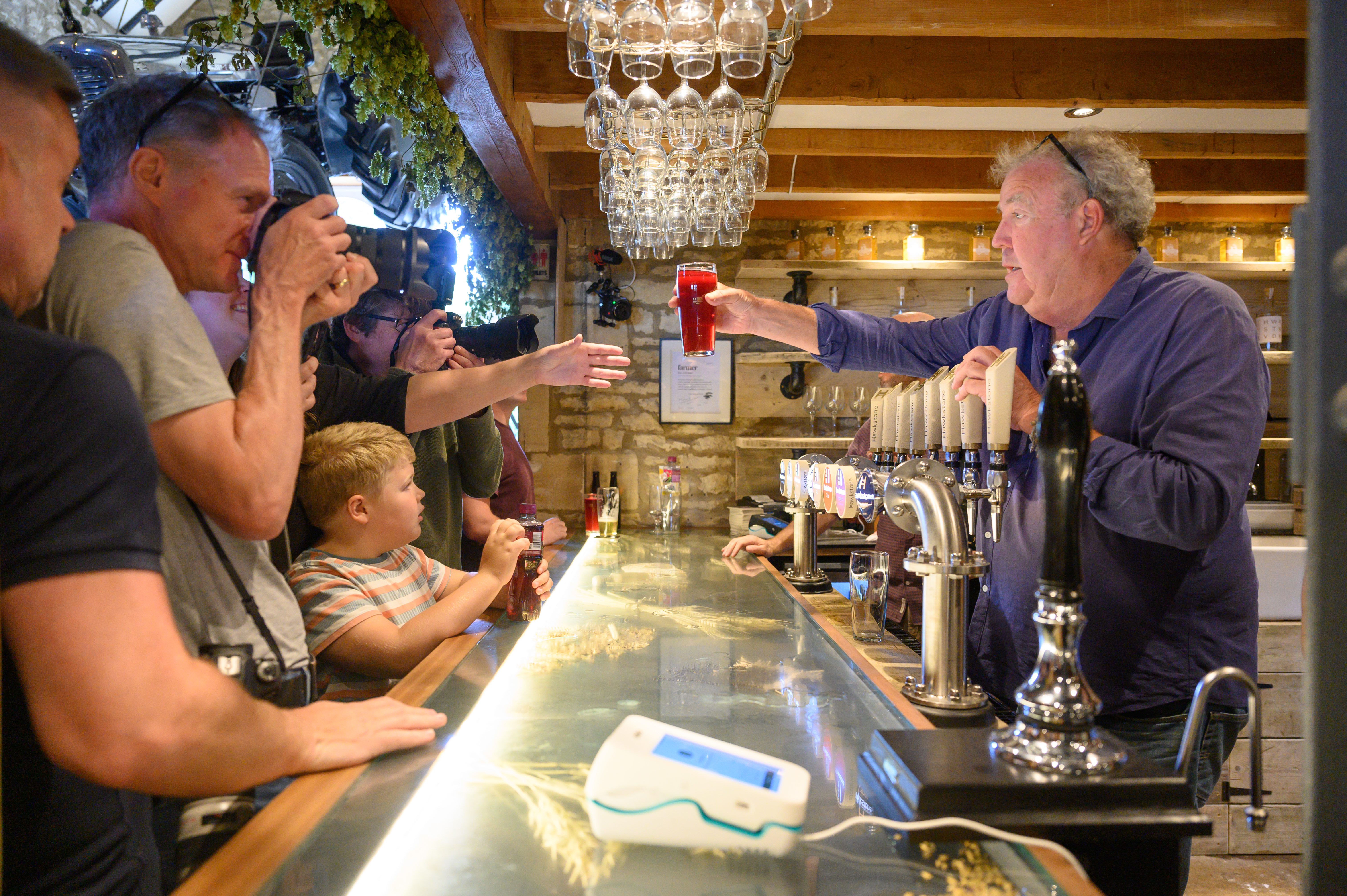
A bank holiday, an opening day and the question of whether it would stay open — the pub's launch brought the series to a suitably uncertain conclusion. After four series of planning battles, council objections, weather events and diversification attempts, the image of Jeremy finally pulling a pint at his own establishment carried a certain weight.