


Latest news on bluetongue disease in the UK
Royal Countryside Fund awards funding to rural support groups
September 25, 2026
The Royal Countryside Fund (RCF) has announced £35,793 of new funding for nine farm support groups, to offer targeted help to farming families dealing with the impacts of drought and bluetongue.
Bluetongue ram fertility concerns could force breeding delays
September 22, 2026
A sheep breeding specialist has warned fertility has been severely affected in a high proportion of rams tested at a farm veterinary practice in the south-west, which is likely to cause difficulties for some farmers in finding sufficient fertile rams for the start of their normal breeding season.
Impact on sheep trade highlighted
September 21, 2026
The bluetongue outbreak is putting pressure on UK sheep production, impacting prices and supplies.
The number of prime sheep and lambs slaughtered for meat in August was 824,000, according to Defra.
New APHA bluetongue map shows suspected and confirmed cases
September 8, 2026
The Animal and Plant Health Agency ( APHA) has published a new map showing both suspected and confirmed bluetongue cases this season to help livestock farmers monitor the spread of the virus going into the Autumn.
Bluetongue cases in Wales climb past 100, as NFU Cymru urges 'no room for complacency'
September 7, 2026
The latest figures from APHA has confirmed there was now 110 bluetongue cases in Wales, with 12 new cases of BTV-3 confirmed in the country as of yesterday ( September 6 2026). There were cases of BTV-3 now found in Bridgend, Carmarthenshire, Clwyd, Monmouthshire, Pembrokeshire, Powys, Swansea and Vale of Glamorgan.
NFU Cymru deputy president Paul Williams said there was 'no room for complacency' when it comes to bluetongue.
Mr Williams said: "Not only can the virus affect animal health, but it also impacts productivity, fertility and trade, creating significant stress and financial pressure for farm businesses.
View from the Rostrum: "Breeding sheep vaccinated against BTV-3 have attracted a premium"
September 4, 2026
Zanna Dennis, development officer at the Livestock Auctioneers Association discusses current livestock trade in light of the growing bluetongue outbreak.
NFU says threat is growing 'day by day'
September 3, 2026
NFU Dairy Board chair Ian Harvey said the threat from bluetongue was still ‘growing by the day' as recorded cases reached 825. Once again he urged farmers to vaccinate flocks saying it remained the best available tool to help protect animals and reduce the impact of this devastating disease.
"I strongly encourage all farmers to speak with your vet to get on the list and place your order for the vaccine as soon as you can - and also start thinking about vaccination for later in the year to ensure your animals are protected next spring," he added.
His views were echoed by NFU acting Livestock Board chair Clare Wise who also called on the Government to do more to recognise the very real financial and practical burden farmers are carrying when dealing with fallen stock.
Ms Wise said: "We are calling for urgent support for the collection and disposal of fallen animals to ensure farmers are not left to shoulder these additional costs alone."
Opinion: Jim Fairlie - "Bluetongue is becoming an endemic disease in parts of Scotland, one we will need to live and work with, rather than one we can simply keep out"
September 1, 2026
Scotland's Agriculture Minister warns movement restrictions cannot be 'relied upon' to safeguard against the climb in bluetongue cases.
Vaccination urged as bluetongue spread further than official maps show
August 28, 2026
Confirmed cases and Government maps are lagging behind the reality of the situation on the ground with bluetongue, with testing systems being overwhelmed by the amount of cases reported.
Speaking to Farmers Guardian at Gisburn Auction Mart on Monday, Chris Sanders from the Pirbright Institute said there was currently a ‘substantial delay' with results.
Farmers urged to vaccinate their livestock amid rise in bluetongue cases in Wales
August 27, 2026
With 49 cases of bluetongue serotype-3 (BTV-3) confirmed in Wales and rising, CLA Cymru has urged Welsh farmers to monitor livestock closely and to speak to their farm vet around vaccination options.
Scotland's Moredun Institute under pressure to expand bluetongue testing capacity
August 27, 2026
Scotland's deputy chief vet, Jesus Gallego Garnica, said he hoped the Moredun Research Institute would be up and running ‘as soon as possible', to alleviate some of the 'pressure' on testing capacity in light of the rise in bluetongue across the UK. But he said the decision was 'out of Scottish Government's hands', and refused to give a time-frame.
Farmers urged to place order for bluetongue vaccine to ensure supply can meet high demand
August 26, 2026
Livestock farmers are being urged to place their orders for the bluetongue serotype 3 (BTV-3) vaccine with their farm vets, to ensure the vaccine is effectively 'pulled through' into England and across the border into Wales and Scotland, with warnings from Chief Veterinary Officers that unless orders are placed, the supply chains will not be able to respond to high demand.
Bluetongue samples to be tested at APHA's Weybridge laboratories due to 'unprecedented scale of the outbreak'
August 25, 2026
To support the national response, testing of bluetongue samples is now taking place at The Animal and Plant Health Agency's (APHA) Weybridge laboratories, alongside The Pirbright Institute.
Bluetongue myths busted: The truth about vaccination, fertility and restrictions
August 25, 2026
With bluetongue cases rising across England, Wales and Scotland, Farmers Guardian takes a look at the myths circulating around the farming community.
The bluetongue surge: Immediate action now and lessons for the future | The Farmers Guardian Podcast
August 25, 2026
LISTEN NOW:
Farmers urged to join NSA survey to prevent bluetongue vaccine shortage next year
August 24, 2026
The National Sheep Association has asked sheep farmers across the UK to take part in a survey to share how many animals they intend to vaccinate against bluetongue in 2027, in a bid to help give manufacturers the ‘confidence' to produce enough vaccine going forward.
Scottish Government introduces bluetongue control zone after Lockerbie case
August 20, 2026
The Scottish Government has introduced a Temporary Control Zone in an area around Dumfries and Galloway, as what has been described as a 'precautionary measure', whilst further investigations are conducted on the source and extent of the disease, after the virus was detected in two lambs near Lockerbie.
Cases exceed 500 across the country
August 20, 2026
Bluetongue cases have reached 517 across the UK. Confirmed cases remain highest in the South West of England, with Devon reporting 304 cases, Cornwall 105 and Somerset 59.
The first case has now been confirmed in Cumbria.
In Scotland, all 6 cases have been confirmed in Dumfries and Galloway.
The majority of cases have been confirmed in sheep, but 5 cases have been confirmed in alpacas and one in a llama.
Rural businesses call for long-term strategy after PM's £65m 'knee jerk' visit
August 17, 2026
Prime Minister Andy Burnham's visit to the Southwest has shone a light on the issues facing many rural businesses, but some have criticised his ‘knee jerk' reaction of a £65m funding announcement and have called for a more long-term strategy to help them grow.
Farmers face 'crisis' as bluetongue drives fallen stock surge
August 14, 2026
The NFU has called on Defra to deliver ‘emergency' support package to help those farmers faced with a ‘crisis' of high levels of fallen stock due to the surge in bluetongue cases.
The NFU president confirmed he was in talks with the Farming Minister and the Defra Secretary regarding an ‘emergency' support package to help farmers who have been hit by bluetongue, and are having to deal with high numbers of dead stock.
TFA demands coordinated Gov bluetongue action as farmers report 'mounting stress'
August 14, 2026
The Tenant Farmers Association (TFA) is calling on the Government to deliver an immediate, coordinated response to the escalating bluetongue outbreak and the severe drought affecting livestock businesses.
The association said members are reporting mounting stress after having to deal with livestock losses, veterinary costs and shortages of grazing, feed and water.
As a result, a paper has been submitted by the TFA to both Defra and APHA.
Farmers urged to order vaccine promptly with local vets
August 14, 2026
Virbac has responded to concerns about supplies of vaccinations for bluetongue as farmers look to protect their flocks.
"Over the past three weeks, the UK has experienced a significant escalation in Bluetongue cases, predominantly affecting sheep flocks. This outbreak has driven unprecedented demand for the BTV-3 vaccine," it said.
"We are working hard to fulfill this demand by expediting orders of GB-labelled stock and importing Special Import Certificate (SIC) product from Europe. We have a continuous supply of stock arriving, but demand is so high that it sells instantly.
"We strongly encourage farmers to evaluate their vaccination needs and place orders directly with their local vets, who can then process these orders through their wholesalers. Prompt ordering is vital, as it provides us with accurate market data, enabling us to secure and distribute the right amount of stock to protect flocks and herds across the country."
Third case found in Scotland
August 14, 2026
The third case of bluetongue has been found in Scotland. According to Government data, there have now been 382 cases in England, 10 cases in Wales and 3 cases in Scotland with no cases reported in Northern Ireland. All the Scottish cases are in Dumfries and Galloway.
Farmers urged to shear their sheep, despite bluetongue fears
August 13, 2026
The NFU has urged sheep farmers to shear their sheep and 'minimise heat stress' within their flocks, despite concerns raised around the rise in the bluetongue virus.
The NFU said they had heard reports circulating that some sheep farmers were deliberating whether to shear their sheep or not due to the bluetongue outbreak, with claims that by losing their fleece, it could increase their physical exposure to biting midges.
Bultavo-3 bluetongue vaccine to reach UK vets within '2 weeks'
August 13, 2026
The pharmaceutical company that is in charge of supplying Bultavo-3 vaccine, one of the three vaccines available against bluetongue serotype-3 virus, said that the vaccine would realistically be available to farm vets in the next '10 days to two weeks'.
It comes as availability of the vaccine has been brought into question following the surge in bluetongue cases across the country, with farm vets in the South West region ‘scratching around' for vaccine, particularly Bultavo-3.
Bluetongue misinformation - what farmers really need to know
August 11, 2026
Bluetongue is spreading faster than last year, and with sheep flocks hardest hit, experts are warning livestock producers to recognise the early signs and be aware of the misinformation around the virus and vaccine.
The message from last week's AHDB and Ruminant Health and Welfare webinar was clear: do not wait until bluetongue reaches your farm before acting.
More BTV-3 vaccine will be arriving 'soon'
August 11, 2026
Boehringer Ingelheim has confirmed that more doses of Bultavo 3 vaccine, one of three vaccines used to protect sheep and cattle from bluetongue virus serotype 3 (BTV-3) will 'soon' be entering the UK.
It comes as both farm vets and farmers have raised concerns over the shortage of vaccine availability in the last week, particularly Bultavo 3, following the rise in cases across the UK.
Shadow Defra Secretary calls for faster bluetongue testing and vaccine rollout
August 10, 2026
The Shadow Defra Secretary has warned the Government must act 'urgently to protect livestock, and to preserve livelihoods' against the growing surge in bluetongue cases across the country.
In a letter to the Defra Secretary, Dame Angela Eagle, Victoria Atkins said that she had received reports of 'slow communication from Defra, lengthy delays within testing regime' as well as concerns over the vaccine rollout capacity.
First bluetongue case found in South-West Scotland
August 10, 2026
A single case of bluetongue serotype 3 (BTV-3) has been found in an animal in South-West Scotland. The latest government figures has confirmed there are 289 cases of BTV-3 in the UK. This includes 283 cases in England, five cases in Wales and now one case in Scotland.
Industry warns sheep farmers of bluetongue risks during peak sales season
August 10, 2026
The National Sheep Association (NSA) and Sheep Veterinary Society (SVS) has warned the industry must acknowledge there are risks involved in moving animals in the face of the bluetongue serotype 3 (BTV-3) outbreak, even though the vector for the disease transmission is a midge.
It comes as the number of bluetongue cases continue to rise as the sheep sector approaches the time of year where breeding and store sheep sales are at their peak.
Shadow Farming Minister accuses Defra of being 'asleep at the wheel' over bluetongue surge
August 8, 2026
Shadow Farming Minister and Yorkshire farmer Robbie Moore has accused Defra of being ‘asleep at the wheel' as official cases of bluetongue surge across the South West.
Mr Moore said the department, which held an emergency webinar for industry members on August 5, had been slow in communicating the situation and that the reporting system was ‘overwhelmed and a bureaucratic nightmare'.
Vet at heart of bluetongue hotspot says: "We are scratching around trying to find vaccine"
August 7, 2026
A farm vet from Somerset has shared his concerns about bluetongue vaccine availability after revealing his practice is ‘scratching around' to find supplies.
Ed Simmons, director and farm vet at Tibbs and Simmons in North Somerset, admitted he has had some ‘sleepless nights' thinking about whether there would be enough supply to vaccinate his clients' animals.
He is now urging farmers across the country to get in touch with their practice to ensure they are added to waiting lists if necessary.
Bluetongue outbreak forces agricultural shows to cancel livestock classes
August 6, 2026
Okehampton and Ashwater shows have cancelled some livestock classes for 'the welfare of the animals'.
Ashwater Agricultural Show also confirmed that due to the ongoing outbreak of bluetongue in the local area, the committee had made the decision that cattle and sheep would not be allowed to attend the show this year.
Livestock experts urge bluetongue vaccination for stronger sales
August 6, 2026
Executive secretary of the Livestock Auctioneers Association Chris Dodds said farmers looking to sell livestock for stores or for breeding purposes should look to vaccinate against bluetongue where possible, as it gives ‘confidence' to the buyer that they are ‘suitably protected'.
Mr Dodds said while the majority of farmers will not alter their selling pattern and will stick to their normal sales, some buyers might be a little more hesitant to buy sheep from areas where there has been a bad outbreak of bluetongue.
His overriding message to the majority farmers was that ‘it is not too late to vaccinate'.
Bluetongue 'soul destroying' for farmers and vets
August 5, 2026
Bluetongue is ‘spreading like wild fire' across the South West in what has been described as a ‘soul destroying' situation.
Rebecca Cavill, vet and director at Torch Farm Vets in North Devon, said she was still waiting for blood test results for around 220 holdings.
"I treated three sheep at a farm last Tuesday (July 28), and by Friday we were treating 100. Two had been lost but by Sunday 15 were lost, and I treated another 60. The farmer only has 200 sheep.
"You are going from call to call and seeing the same array of symptoms."
Wales' chief vet warns farmers to source livestock safely amid rise in bluetongue cases in England
August 5, 2026
Wales' Chief Veterinary Officer has warned Welsh farmers to source stock safely and ‘do not buy in more than you bargained far' during the upcoming breeding season, following the rapid rise of bluetongue in the south west of England.
Richard Irvine said it was a ‘worrying picture' that was unfolding in England and it was time for farmers and vets in Wales to take action now to 'get ahead' of what was a 'gravely concerning' situation in the south west counties.
Mr Irvine said: "With breeding season approaching, sourcing stock safely is going to be crucial. Farmers need to understand the health status of livestock in regards to bluetongue, understand the vaccine status, particularly when buying in stock. In a nut shell source stock safely so you do not buy in more than you bargained for."
Defra faces criticism over bluetongue reporting 'nightmare'
August 4, 2026
A Liberal Democrat MP has criticised Defra for its 'nightmare' reporting process when it comes to bluetongue.
The Tiverton and Minehead MP Rachel Gilmour said farmers and vets told her that the Defra reporting process was a 'nightmare' and that in one case, it took a vet an hour to report a single incident.
She said: "There is no way to cross-reference if the same farm reported a case the week before.
"Defra needs to step up its game in supporting and listening to our farmers. They need to understand that our farmers are on the frontline of climate change, and that this outbreak is a direct result of it."
Farmers forced to house 'vulnerable' livestock during peak midge activity
August 4, 2026
The NFU vice president said farmers are moving 'high risk' or 'non-vaccinated' stock away from 'wet, low-lying or sheltered areas' and keeping 'vulnerable animals' housed during peak midge activity.
Robyn Munt said changes to the management of livestock was adding pressure on farmers and forage stocks during an already challenging time.
It comes as bluetongue continues to spread at an 'alarming rate' raising significant concerns for livestock farmers across the country.
Bluetongue cases shot up last week to 'over 590', says NSA
August 3, 2026
National Sheep Association (NSA) said the number of reported bluetongue cases shot up last week to 'over 590, from just 115' the previous week, but that vaccine manufacturers were still able to keep up with demand.
NSA chief executive Phil Stocker said calls on stocks of vaccines have increased and stocks have reduced, but he said they have been assured that vaccine manufacturers are doing what they can to ensure demand can be met.
Bluetongue surge prompts urgent farming industry briefing
August 3, 2026
Soaring cases of Bluetongue serotype-3 (BTV-3) have prompted an urgent industry briefing later this week (Wednesday August 5), with the situation in the South West of England described by a local farm vet to be 'rapidly getting worse'.
Welsh farmers urged to be vigilant as more bluetongue cases confirmed
August 3, 2026
Farmers and livestock keepers across Wales are being urged to check for signs of bluetongue, report any suspect cases to APHA and consider vaccination, as more BTV-3 cases are being confirmed in England and Wales.
MP demands urgent action as South West becomes bluetongue hotspot
August 2, 2026
Liberal Democrat Rural Affairs spokesperson Sarah Dyke has called on the Government to take urgent action to support South West farmers following a sharp rise in confirmed cases of bluetongue virus (BTV-3) across Somerset and Devon.
In the fortnight to 23 July alone, more than a dozen cases were confirmed across Somerset and Devon, with new cases recorded on almost every reporting date. Some affected animals have died, while symptoms have included fever, facial swelling, ulceration around the mouth, lameness and rapid loss of body condition.
More work needed on easing of bluetongue restrictions in Wales
August 4, 2025
Farmers in Wales have been provided a small ray of hope that the impact of bluetongue restrictions could be reduced over the next few months, but only if livestock have been vaccinated.
Welsh Government has announced that from August 18, 2025, farmers could potentially take livestock to one of eight pre-approved markets in England within a 12 mile radius of the border.
However, farmers will have to prove all livestock has completed a course of bluetongue serotype 3 (BTV-3) vaccination before entering auction marts.
What is bluetongue?
Bluetongue is a notifiable disease caused by infection which can affect ruminants, such as sheep, cattle, goats, deer, and camelids.
Bluetongue can be spread by certain species of biting midges, through the movement of infected animals and animal products (such as blood and germinal products including semen, eggs, ova and embryos) within the UK and through imports, and infected pregnant animals transmitting the virus to their young.
Signs and symptoms of bluetongue
Defra has provided the following information on the signs of bluetongue.
Sheep
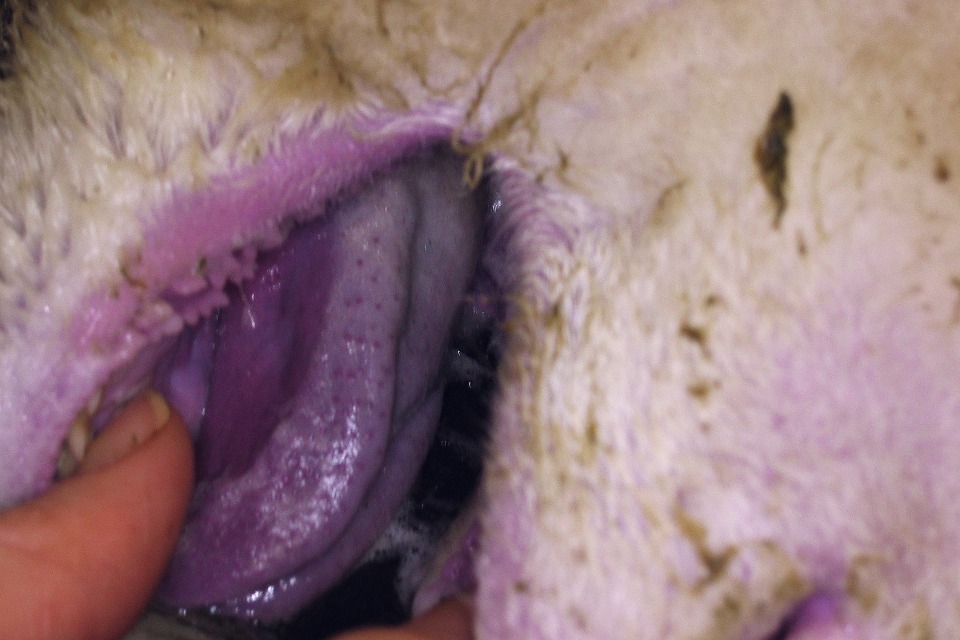
- Ulcers or sores in the mouth and nose
- Discharge from the eyes or nose and drooling from mouth
- Swelling of the lips, tongue, head and neck and the coronary band (where the skin of the leg meets the horn of the foot)
- Red skin as a result of blood collecting beneath the surface
- Fever
- Lameness
- Breathing problems
- Abortion, foetal deformities and stillbirths
- Death
Lambs
- Lambs born small, weak, deformed or blind
- Death of lambs within a few days of birth
- Stillbirths
Cattle
- Lethargy
- Crusty erosions around the nostrils and muzzle
- Redness of the mouth, eyes, nose
- Reddening of the skin above the hoof
- Nasal discharge
- Reddening and erosions on the teats
- Fever
- Milk drop
- Not eating
- Abortion, foetal deformities and stillbirths
- Adult cattle may be infectious for several weeks while showing little or no sign of disease. They are often the preferred host for biting midges (the vector of bluetongue virus).
Calves
- Calves born small, weak, deformed or blind
- Death of calves within a few days of birth
- Stillbirths
What does bluetongue look like?
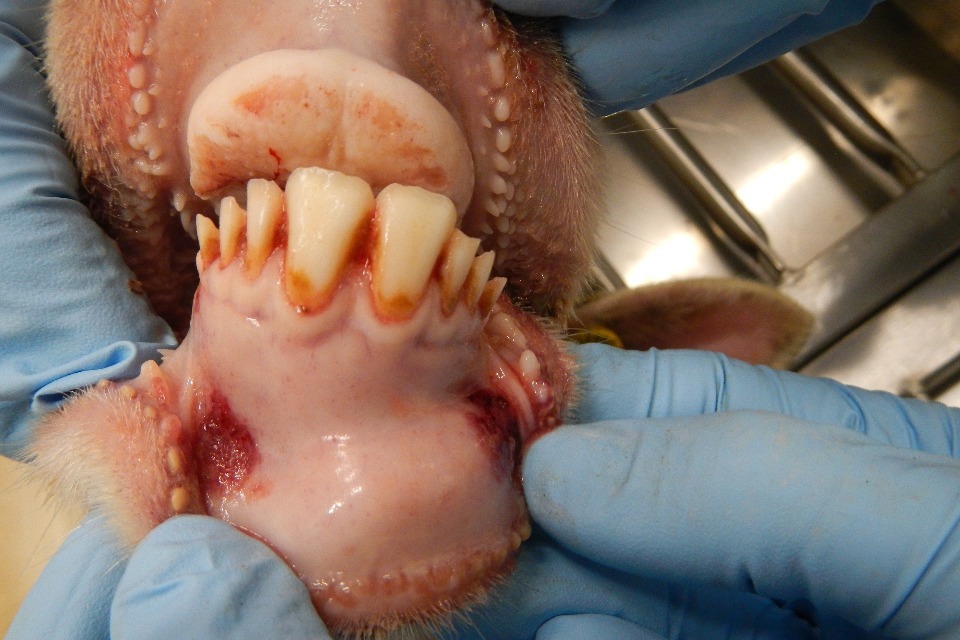
(The Pirbright Institute)
Preventing bluetongue
- Responsibly sourcing livestock
- Remaining vigilant to signs of disease
- Housing animals in buildings that keep out biting midges – this is especially important at dawn and dusk
- Maintaining good hygiene and biosecurity on your premises
- Not allowing farm dogs, cats or pets to eat, chew on or play with potentially infected materials (such as aborted material and afterbirth)
- Vaccinating your animals with a suitable authorised vaccine
Government advice
Following the extension of the bluetongue virus restricted zone, from July 1, to cover the whole of England, UK Chief Veterinary Officer Christine Middlemiss said: "Through movement controls, we have slowed the westerly spread of bluetongue until vaccines are available.
"We are now moving away from Government-imposed movement controls, which are costly and disruptive to farming particularly those within the zones.
"An all-England restriction zone will allow livestock farmers currently impacted by burdensome restrictions to be on equal footing with rest of England," Dr Middlemiss added.
"I urge all livestock keepers to report suspect disease. It is especially important to remember that foot and mouth disease and bluetongue can have similar clinical presentation."
Animal and Plant Health Agency's chief executive Jenny Stewart said: "Scientists, vets and field teams from the Animal and Plant Health Agency are working hard to help tackle bluetongue virus and ensure farmers are kept up to date and supported."
Vaccines
Defra has granted permission for three bluetongue vaccines to be used in England.
How can you report bluetongue?
Farmers should remain vigilant and, as a legal requirement, report any suspicious signs of the disease in their livestock to Defra.
This can be done by calling the Defra Rural Services Helpline on 03000 200 301.
In Wales, contact 0300 303 8268. In Scotland, contact your local Field Service Office.
For more on animal health, visit our Livestock hub.