Established by Fashion Roundtable with The King's Foundation and YOOX Net-a-Porter Group, alongside their Modern Artisan programme in September 2024, the Great British Wool Revival aims to promote British wool and give farmers an opportunity for income generation from their wool.
Creating a network of businesses to join up industries, hundreds of different businesses, from graders and spinners to farmers, are listed on a mapping system, enabling a true farm-to-fabric business model and long-term relationships that can help to create a healthy wool fibre ecosystem.
Tamara Cincik, founder and CEO of Fashion Roundtable and The Great British Wool Revival, says the initiative is well timed and will help to strengthen the farmer to designer supply chain, making British wool, natural dyes and best-practice more accessible in the UK.
"The revival plugs the systems gap by supporting local production, regenerative practices and fully traceable supply chains. We have had over 200 brands and businesses join our map to date, and thousands of page views in the last year. The 'Dumfries House Clip' scarf, which used wool from Dumfries House, sold out in under 48 hours," she says.
"The Great British Wool Revival champions British wool, ensuring farmers receive a fair price for their fleeces, which is too often seen as a by-product of the meat industry, while serving as a vital bridge between farmers and designers. We are so excited to see how this initiative progresses and grows supporting local wool and on-shoring."
LISTEN NOW:
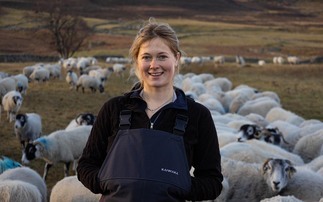
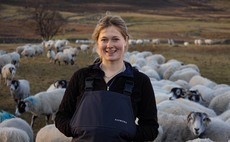
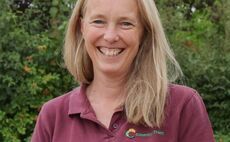
Farmer Katie Cotmarsh is also part of the campaign and keen to support initiatives that ‘shout about the virtues and value of wool'.
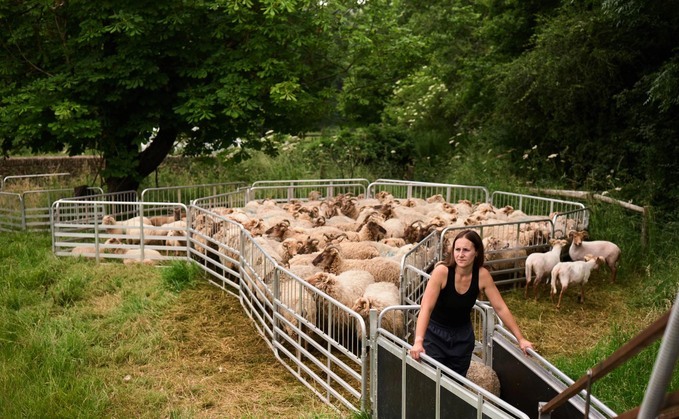
An organic livestock farmer at Great Cotmarsh Farm, located at the foot of the Marlborough Downs in North Wiltshire, abutting the North Wessex Downs National Landscape, she runs 280 native breed sheep – Castlemilk Moorit and Portland - and 30 British White Cattle.
Native breeds
Her choice to work with native breeds echoes the needs of the landscape, and they are suited to the pasture-based, zero input system.
She says: "They thrive outdoors, are hardy and offer very different characteristics for wool production yet are ideally suited to long lasting, high performing wool knitwear.
Katie's farming methods supports nature recovery and soil health, avoiding chemicals or synthetic fertilisers.
The farm is certified organic with the Soil Association and ‘we are committed to working with the restorative power of grazing animals on pasture through our certification with Pasture for Life'.
They are in a soil health monitoring scheme with Regenerate Outcomes, and part-way through an exciting agroforestry scheme planting over 1 kilometre of new hedgerows, as well as more than 6,500 trees in partnership with the Woodland Trust.
But raising the profile of the wool industry is one of her main missions, borne from a desire to increase the value of her flock's fleece.
"When I first started working with sheep nearly 15 years ago, the local farmers were really despondent about the value of their wool clip. I wanted something different for my own fleeces so decided to create my own knitwear brand under my name," she says.
"At the time, there was a real push for farm shops and vegetable box schemes, so my journey with my flock's wool started with a desire to give our clothes the kind of traceability we were looking for with our food.
"The more I learnt about the environmental and social tragedies occurring all along the fashion supply chain, however, the more important it became for my knitwear to stand for a new way of producing clothes. One that honoured the process of making, elevated the experience of natural fibres and which had an aspirational quality that meant each piece would be treasured."
Lake District farmers support wool campaign
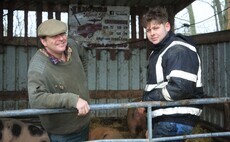
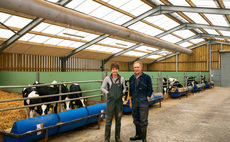
Lake District farmers John Atkinson and Maria Benjamin are also part of the Great British Wool revival.
Running around 350 sheep and 100 head of cattle, the couple keep native breeds, including Whitebred Shorthorn cattle and Lairg type North Country Cheviot sheep.
Maria says: "Over the years we have kept many different sheep breeds for their wool, but we now buy fleece from other farmers and have simplified the livestock on our own farm."
Promoting wool is something Maria has always been passionate about, and set up Lake District Tweed, sourcing fleece from around 20 Lake District farmers, followed by the creation of The Wool Library, which Zoe Fletcher and partner John set up together. Between them, they have an extensive knowledge of wool – Zoe is a textile designer and has a PhD in British sheep breed wool characteristics, and John is Chair of the Rare Breeds Survival Trust.
The campaign will head to Dumfries House, which is part of The King's Foundation, for a wool summit about supply chain sustainability and the future of wool in May.