



The future of livestock production is often discussed in terms of genetics, efficiency, welfare and sustainability. But, the reality is that the future of every livestock enterprise starts at birth.
Calves, lambs, piglets and chicks carry the next generation of performance. The way they are protected, monitored and managed in early life can influence growth, resilience, disease risk and lifetime productivity.
For farmers working to build sustainable profit, youngstock health should not be a separate priority but should be treated as one of the key foundations of the whole business.
Early-life disease can have long-term consequences. A lamb that gets a poor start may struggle to reach target weights. A piglet affected by disease pressure may require more inputs to achieve the same performance. A chick that is compromised early can affect flock uniformity and later productivity. In dairy systems, calf health can influence future fertility and milk production.
Across all species, the principle is the same - prevention and early intervention are more sustainable than trying to recover lost performance later.
This is where technology is changing the conversation. It is helping vets and producers move from reactive health management to earlier detection of issues and more data-led decision-making.
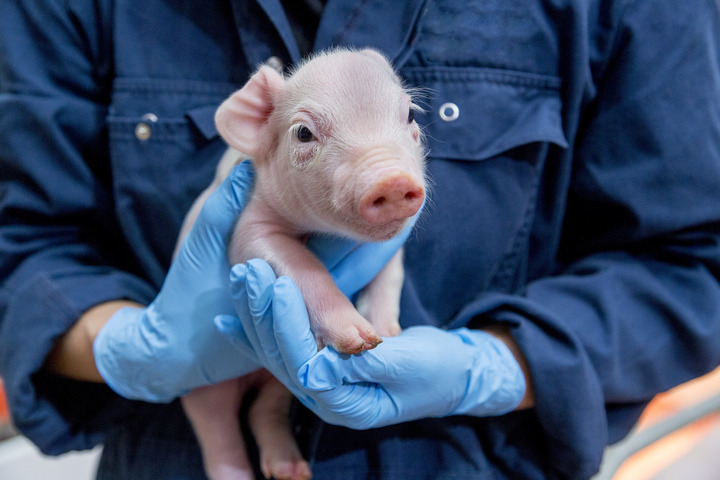
In pig production, vaccination remains a critical part of herd health planning, but the way vaccines are delivered also matters. Needle-free intradermal vaccination technology such as IDAL offers a lower-stress approach to swine vaccination, supporting welfare while helping make vaccination programmes more efficient and consistent. For young pigs, where early protection can influence health, growth and uniformity through the production cycle, practical delivery systems can make a real difference.
In poultry, MSD Animal Health UK offers hatchery vaccination solutions that can be administered in-Ovo or subcutaneously as part of a veterinary health plan. Used appropriately and under veterinary direction, these approaches may support early protection against relevant poultry diseases and contribute to consistency in flock health management from the earliest stage of life.
For sheep producers, the opportunities are different but equally important. Electronic identification, automatic weighing, handling systems and stick readers can help track growth rates, identify poorer-performing lambs sooner and support targeted decision-making. This technology facilitates a strategic shift from reactive, flock-level oversight to proactive, data-driven management on an individual animal basis.
In cattle, systems such as SenseHub show how continuous monitoring can provide immediate, actionable insights into behaviour, health, nutrition and wellbeing. And that principle is the same for any species: better data helps farmers see small changes earlier, act with greater confidence and measure the impact of management decisions.
MSD Animal Health UK veterinary advisor, Monika Ptaszynska-Sutton, explains: "Youngstock health is where future performance is won or lost. Technology will never replace good stockmanship, but it can strengthen it and help farmers spot problems earlier, protect animals more consistently and make decisions based on evidence rather than assumption."
This reflects MSD Animal Health UK's central belief that no one sees animal health like we do. Through science-led medicines, vaccines and technology, the aim is to support farmers and vets in seeing the full picture of animal health. This isn't just about the disease in front of them, but the lifetime potential behind every young animal.
Youngstock deserve their own focus because they are not simply tomorrow's productive animals. They are today's opportunity to improve welfare, efficiency and sustainability from the very start.


