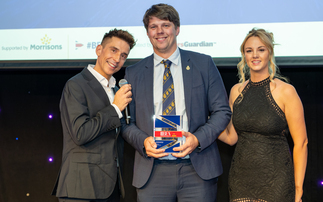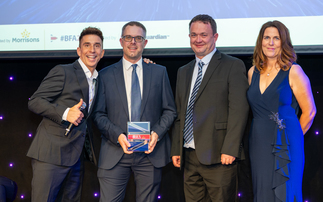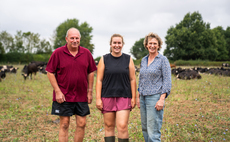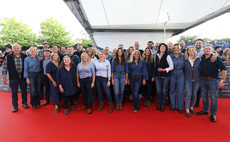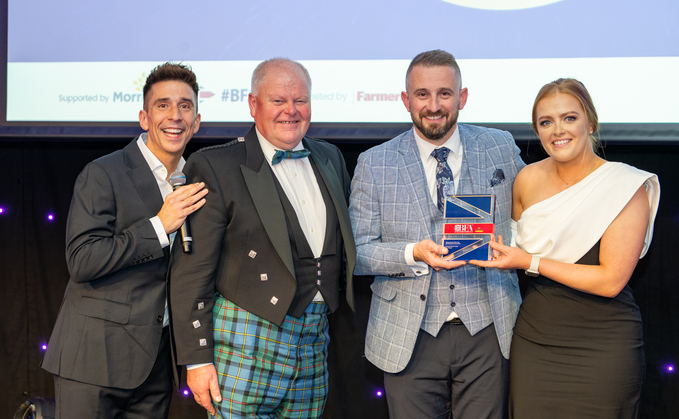
Winners of the British Farming Awards 'Sheep Farmer of the Year' award 2025, George and Nicola Wordie
For fourteen years, the British Farming Awards has shone a light on the best in British Farming. During this annual event, Britain's farming industry comes together to celebrate the achievements of its contemporaries.
The 2026 Sheep Farmer of the Year finalists have been selected because of their efforts towards safeguarding the land for future generations and the steps they are taking to embrace sustainable farming practices which work in harmony with the environment.
Our 2026 finalists all own or manage a farm in the UK, seeking to proactively reduce their carbon footprints whether that be through exploring regenerative agriculture, biodiversity, soil health, water management stockmanship and renewable energy to name but a few.
Finalists for the Sheep Farmer of the Year award, sponsored by Farmers Guardian
Paul Slater, The Whiteley Hey Flock, Cheshire
Cheshire's Paul Slater has built a successful sheep enterprise around breeding high-performing stock for the commercial market, with quality genetics and attention to detail at its heart.
The 200-hectare grassland farm runs 1,100 breeding ewes and produces 450-500 Beltex-cross and Texel shearling rams annually, alongside around 600 breeding females. The farm has not bought a ewe for 45 years, instead investing heavily in genetics and carefully selecting stock rams.
Now in its 25th year, The Whiteley Hey Flock's annual production sale is a major outlet, with last year's 200 rams averaging £1,254. MV accreditation, achieved in 2021, has also opened new markets, attracting more than 20 new customers in 2025.
Sustainability and welfare underpin the system, from herbal leys and low fertiliser use to rigorous lambing management and vaccination. The farm also welcomes the public and supports young people entering agriculture, with former students going on to establish their own flocks and farms.
MORE SHEEP INSPIRATION: Why the Welsh Mule is the breed with no by-product in a traditional Mid Wales beef and sheep system
C Lindsay Farming, Isle of Arran
Young family business C Lindsay Farming is building a resilient sheep enterprise across 3,668 hectares on the Isle of Arran, combining its own farm at Hillside with tenanted and contract farming agreements.
Callum and Zara Lindsay manage 3,500 sheep alongside beef, with a full-time shepherdess and additional contract labour supporting the business at key times of year. Recent expansion has brought an additional 8,500 acres into the business, creating economies of scale and allowing labour, machinery and management resources to be used more efficiently.
At Glenree, an Environmental and Climate Scheme is being integrated with productive farming through planned grazing, forage rotations and mixed livestock. Stubble turnips and forage rape provide high-quality winter feed before reseeding, improving soil fertility while reducing reliance on purchased feed.
Looking ahead, the Lindsays plan to increase hill ewe numbers, strengthen flock genetics and build on mixed grazing, while continuing to improve productivity and environmental performance across their holdings.
SEE ALSO: Could slatted flooring be considered in your sheep shed?
William Roobottom, Staffordshire
Staffordshire farmer William Roobottom has transformed a small sheep enterprise into a progressive, low-input business focused on producing more from grass while keeping costs under control.
Farming 200 hectares at Cowley Hill Farm, William runs 535 breeding ewes and hoggs, predominantly Lleyn, alongside EasyCare genetics. Rotational grazing and careful pasture management underpin the system, with neither ewes nor lambs receiving concentrates.
Lambs now achieve daily liveweight gains of 300-330g from grass alone, compared with around 180g when William began recording performance.
A major change has been moving from indoor to outdoor lambing, reducing labour, bedding and feed costs while allowing the flock to expand. Over the past two years, this shift and the move to a lower-input system have increased the margin by £40 per lamb.
With MV accreditation, data-led parasite control and a focus on easy-care genetics, William is building a resilient enterprise, recently strengthened by a new council farm tenancy and his growing social media presence.
READ NEXT: Why a commercial focus is central to all breeding decisions for Corras Texels
M. Seed and Son, Home Farm, Auchry
At Home Farm, Auchry, Matthew and Rachel Seed are using genetics, data and a focus on flock health to drive performance across their 178-hectare mixed sheep and beef farm.
The business runs 1,300 sheep, including pedigree Texel and Bluefaced Leicester flocks alongside 350 commercial crossbred ewes producing quality prime lambs and replacement females. An embryo transfer programme also helps maximise the potential of the flock's best-performing females.
Performance recording, genomic evaluation and digital weighing are central to the breeding strategy, allowing the family to make informed decisions and continually improve efficiency.
The closed flock has seen increasing lamb output per ewe, with more than 70% of commercial lambs sold finished directly from their mothers before weaning over the past three years. The flock has also won its local prime lamb competition for the past two years.
With MV accreditation, annual carbon audits and reduced mastitis incidence, M. Seed and Son is combining high-performing genetics with robust flock health and sustainable management.
A. and R. Wilson, Middlesbrough
Middlesbrough-based A. and R. Wilson are combining traditional family farming with technology to build an efficient, data-led sheep enterprise.
The 100-hectare mixed farm runs 600 breeding ewes, including pedigree Kerry Hill and Llanwenog flocks alongside a commercial flock. The business aims to remain as closed as possible, breeding its own replacements and carefully selecting rams, while focusing on maternal genetics, lamb growth rates and carcase performance.
Every sheep is electronically identified, with weights, body condition, health treatments and causes of death recorded. Lambs are weighed weekly using an electronic weighing system and auto-shedder, allowing the family to identify problems early and manage more sheep without increasing labour.
Post-mortems on all farm deaths provide further insight into flock health and welfare, supporting annual reviews with their vet. With solar power, rainwater harvesting and optimised fertiliser use also reducing costs and inputs, the Wilsons are building a more self-sufficient business while improving flock efficiency for the next generation.
MORE ON SHEEP: Border disease could be quietly costing your flock