As a manufacturer of construction and agricultural machinery, JCB holds a surprising mix of land speed records, including the fastest diesel car in 2006, the fastest digger in 2014 and the fastest tractor in 2019.
With the launch of its hydrogen combustion engine in 2020, it was only a matter of time before the manufacturer wanted to add to this list with the world's fastest hydrogen-fuelled car.
READ NOW: Opinion: AI – farming's friend or foe?
The Federation Internationale de l'Automobile (FIA), the global governing body for motorsport, has introduced a hydrogen-fuelled category for land speed racing, with JCB acting as the first entrant in this year's Bonneville Speed Week in Utah, USA. Hosting land speed record attempts since 1914, the 30,000-acre dried lake has been the site of several famous records, including JCB's 350.092mph Dieselmax run in 2006.
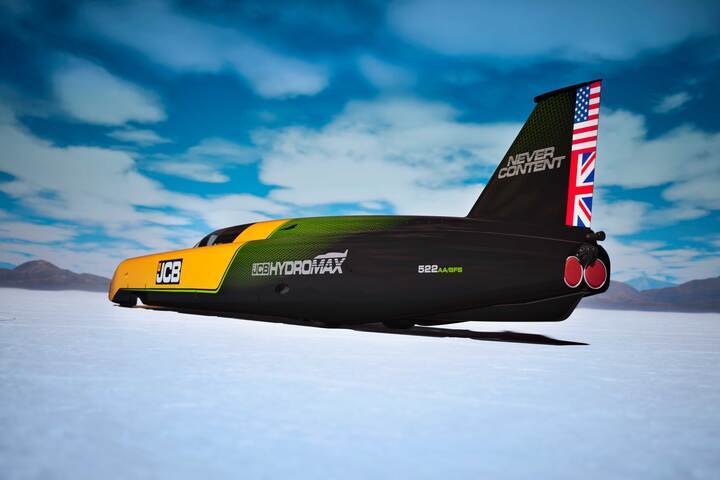
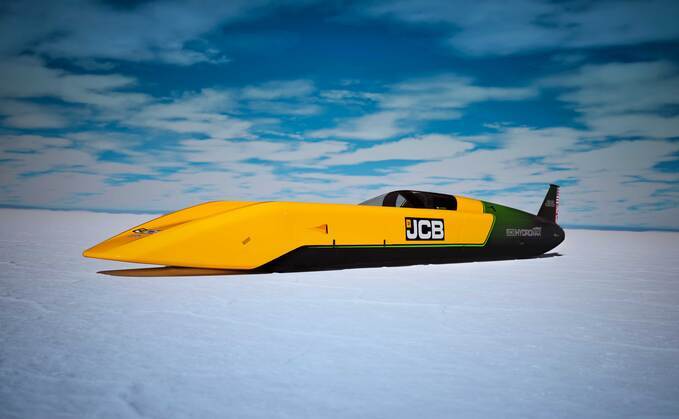
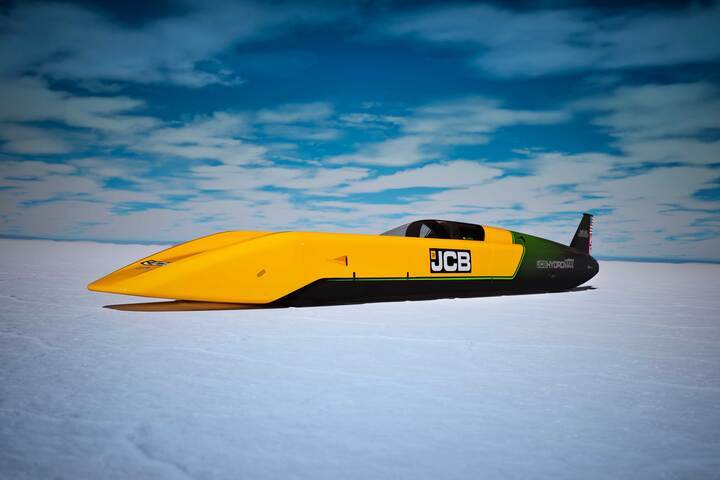
Commenting on the challenge, project chief engineer Lee Harper said: "We had a great foundation in the Dieselmax car from 2006, and that became the starting point for Hydromax. What we have now is a car that is more powerful, 10% lighter and 10% more slippery, and that gives us a great recipe for performance."
"The Hydromax is probably the most challenging technical endeavour we have ever undertaken. Fundamentally, it takes many of the same laws of physics we use to build our yellow products — backhoe loaders, telescopic handlers, wheel loaders and tractors — but now we are applying them for the purposes of going really fast."
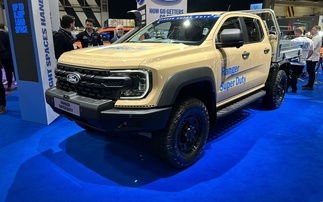
READ NOW: Ford plans to offer its Australian-developed Ranger Super Duty to UK buyers
Power for the car is delivered from two four-cylinder engines, with one driving the front wheels and one driving the rear. Physically, the only connection between the two drivetrains is the salt surface of the lake bed. This removes the complexity and weight of a connected driveline, but also requires complex engine management to operate the two engines in tandem.
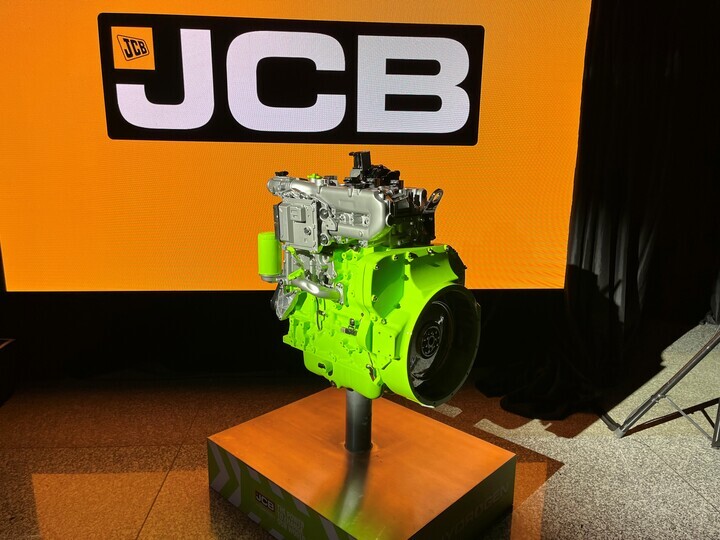
The car uses two tuned and uprated ‘conventional' four-cylinder hydrogen engines
The major change from a ‘conventional' JCB hydrogen engine and the units fitted in the car is power output. Production versions of the engine deliver a typical output of 80hp, but for Hydromax this has been increased to 800hp, giving a combined total of 1,600hp.
To provide sufficient space for the fuel tanks and cooling infrastructure, each engine is mounted at 82 degrees and now operates with a dry sump, separate oil reservoir and air separator.
"Cooling is a particular challenge on the Hydromax car," said Lee.
"We have got an enormous amount of power with a combined 1,600hp which means we have also got quite a bit of reject heat.
READ NOW: On Test: Kawasaki Mule Pro-FX 1000 – can this petrol UTV match diesel performance?
"We are operating in high ambient temperatures and at 1,300 metres above sea level at Bonneville, where the air is around 12% less dense than at sea level.
"The major challenge is getting rid of all that heat without creating drag. Drag and aerodynamic efficiency govern all land speed racing.
"The car is designed to operate on ice cooling and uses the phase change from ice to water to dissipate heat and keep the engines operating optimally throughout the run."
JCB is currently tight-lipped about the speed it wants to achieve, but in excess of 350mph is a sensible assumption. There is currently no official land speed record for a hydrogen combustion vehicle, but as part of the project's aim is to demonstrate the capability and performance of hydrogen as a diesel replacement, matching or beating its own diesel-powered record must be a major objective.
Driving the car will be the current fastest man on earth, retired RAF Wing Commander Andy Green. He holds the current land speed record from Thrust SSC in 1997 with a top speed of 763.035mph and also piloted the Dieselmax vehicle in 2006. Speaking about the challenge, he said: "The FIA does not often create new car classes for people. They are creating a new car class for that vehicle, not because it needs to be in a class of one.
"It is because it is the first of many future cars that will use hydrogen internal combustion, because they see it as at least part of the future, if not the future.
READ NOW: EXCLUSIVE: JCB's Lord Bamford - is the future of farming fuelled by hydrogen?
"We did Dieselmax 20 years ago, and when JCB spoke to me and said they had hydrogen engines, my background is as an aviator, and aviation and hydrogen do not have a good history. So I had a few questions, but I have seen how the engines work, and the more I have seen and heard, the more I realised everything I knew about hydrogen dated back to the 1920s.
"This car will be able to do it and has loads of engineering safety built into it at the same time, which we did not have the capacity to do 20 years ago, because technology and material science have moved on so much."
Following engineering testing in the UK in June, the car will take part in Bonneville Speed Week in August to try and set a record-breaking speed.
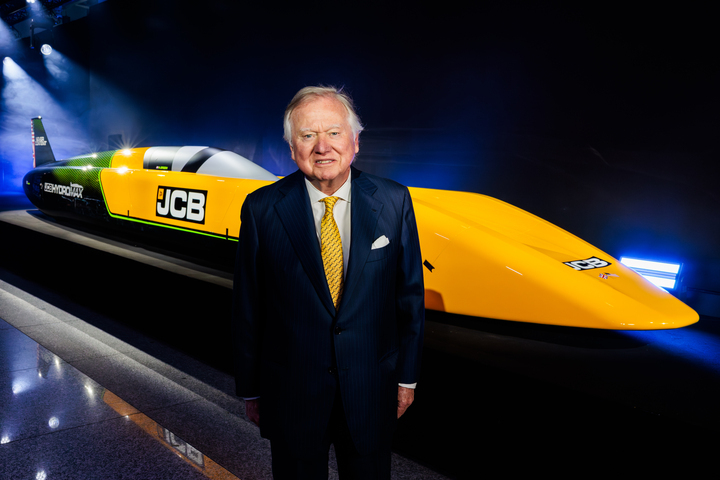
The project is a personal endeavour of JCB chairman Anthony Bamford. Speaking during the car's reveal, he said: "Britain has a proud heritage of setting speed records and, as a British company, I am excited to challenge for a new one using hydrogen. This is not just about speed, it is about showcasing the world-class engineering talent we have here in the UK and the robustness of our new hydrogen engines."
"JCB Dieselmax was always a bit of an unusual idea, but it proved a point. Putting an advanced engine into a land speed car showed the world what it could do in a way a digger never could.
"It is the same thinking with hydrogen today. If you are serious about emissions, you have to be serious about hydrogen — and a land speed project is the perfect way to prove it.
"As for the speed we are aiming for with JCB Hydromax — we intend to beat 350mph."