Farms are wonderful, vibrant places, full of energy, enthusiasm and hard-working people. Through my farm visits I have learnt to respect farmers even more than I ever did. They are a workforce that constantly strives to do their best, working long hours to feed the country.
As such, I have a strong desire to help farmers as much as possible to work in safe and healthy environments. I find it particularly sad when accidents occur – especially when they involve hazards that, with the right planning and precautions, could potentially be prevented.
Recent incident highlights danger
A recent incident in Hertfordshire provides a stark reminder of the risks involved in handling and loading hay bales.
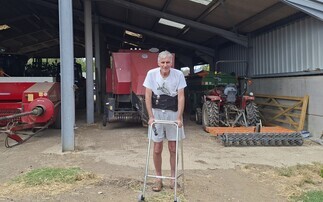
On 20 June 2026, farmer Will Dickinson was loading hay bales onto a trailer on his family farm near Harpenden. While he was pulling a securing strap over the load, the trailer became unbalanced and three bales fell onto him.
READ MORE: Farmer determined to get back to work after being crushed by hay bales
The three bales weighed approximately 1,500kg in total.
Mr Dickinson suffered 12 fractured ribs, eight spinal fractures and a fractured pelvis. He was airlifted to hospital and was initially told there was a 75% chance that he would never walk again.
Thankfully, he is now recovering and is determined to return to full fitness.
His experience is an important reminder that hay bales are not simply agricultural products waiting to be moved. They are heavy loads capable of causing catastrophic or fatal injuries if they become unstable or are handled incorrectly.
And this is not an isolated problem.
A bale stack must be treated as a potentially dangerous structure. A falling bale can kill.
What does the law say?
Regulation 10(4) of the Work at Height Regulations 2005 states:
"Every employer shall ensure that materials and objects are stored in such a way as to prevent risk to any person arising from the collapse, overturning or unintended movement of such materials or objects."
Regulation 10(1) also requires suitable and sufficient steps to be taken, where necessary to prevent injury, to prevent the fall of materials or objects so far as is reasonably practicable.
The important point here is that simply putting bales somewhere convenient is not enough. Think about:
- Where the bales are stored
- What they are stored on
- How they are stacked
- How stable the stack is
- How the bales will be removed
- Who will be permitted into the area
- What machinery will be used
- What happens if a bale becomes damaged or the stack becomes unstable
How should hay bales be stacked?
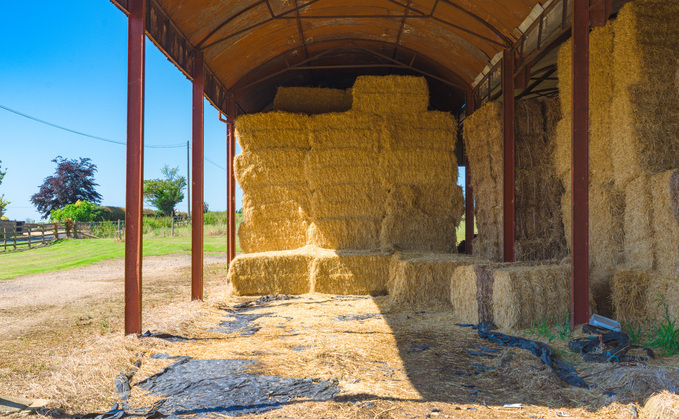
HSE guidance states that stacking bales is a skill and should be carried out by trained and competent people.
The foundation of the stack is particularly important. Bales should be stored on a firm, stable and suitable surface, rather than relying on unstable or deteriorating materials to support the stack.
Stacks should be constructed so that the bales effectively support and "tie in" with one another.
For example, with large square bales, alternating layers and overlapping bales can provide additional stability. The stack should generally have a wide base that narrows slightly as it gets higher.
READ MORE: Farm Safety Week: 'I could have prevented the pain and suffering I went through'
HSE guidance states that large square/high-density bale stacks should not be built higher than:
- One and a half times the width of the base
- The reach of the equipment available to de-stack them
- Ten bales on hard-standing or concrete
- Eight bales where no hard-standing is available
These limits must also be considered alongside the specific type, size, weight and condition of the bales and the storage arrangements.
Small square bales should be closely interlocked, with alternate layers rotated and slightly offset, creating a pattern similar to brickwork.
The objective is simple: The stack must remain stable throughout its life – not just when it is first constructed.
Do not forget the de-stacking operation
One area that can easily be overlooked is how the bales are going to be removed.
It is not enough to construct a safe stack if removing the first few bales creates an unstable face or causes the remaining stack to collapse.
The method of de-stacking should therefore be considered before the bales are stacked.
HSE guidance recommends that stacks are inspected regularly and that de-stacking is carried out safely.
If a stack looks unstable, do not simply walk up to it and start removing bales.
Keep people away from the area and use appropriate equipment and a safe system of work to make the stack safe.
READ MORE: Farm safety: Fatigue management can prevent farm accidents
Loading and unloading bales
The recent Hertfordshire incident also highlights the risks involved when loading bales onto trailers.
HSE guidance identifies loading and unloading as activities where serious and fatal incidents have occurred.
Before loading:
- Check that the trailer is suitable and in good condition
- Ensure the trailer floor is sound
- Consider suitable end racks or hay ladders where appropriate
- Build the load so that it is stable and able to bind itself
- Use sound bales for the outside edges
- Keep people away from areas where bales could fall
- Ensure the load is properly secured before the trailer is moved
- Never allow people to ride on top of an unsecured load
Care is required when working near the edges of trailer beds or bale stacks. A fall from the trailer or stack can result in serious injury in its own right, while a person standing below could also be struck by a falling bale.
Keep people away from bale stacks
A very simple control measure is often one of the most effective: Keep people away from the danger area.
Bale storage areas should be managed so that children, visitors and anyone not involved in the operation cannot access them.
This is particularly important on farms where children and visitors may be present.
HSE guidance also recommends keeping pedestrians clear when lifting or handling equipment is operating.
Where possible, pedestrian routes should be separated from bale storage and handling areas.
LISTEN NOW: Farming in Five - your daily news update from Farmers Guardian
Inspect your stacks
A stack that was safe yesterday may not necessarily be safe today.
Bales can move, deteriorate or become damaged.
Stacks can also be affected by:
- Water ingress
- Poor or deteriorating bales
- Movement of adjacent bales
- Impact from tractors, telehandlers or other vehicles
- Changes to the stack during de-stacking
- Uneven or deteriorating ground
- Weather conditions where bales are stored outside
Stacks should therefore be inspected regularly and particularly after any event that could affect their stability.
If something does not look right, stop and reassess the situation.
Do not forget the fire risk
Safe storage is not only about preventing bales from falling.
Hay and straw can also present a significant fire risk, particularly if hay is baled before it has dried sufficiently.
Storage arrangements should therefore consider:
- Moisture content when hay is baled
- Adequate ventilation
- Heat build-up within stacks
- Separation from ignition sources
- Electrical equipment and lighting
- Access for emergency services
- Safe separation from buildings, machinery and other combustible materials where appropriate
Good housekeeping and sensible storage arrangements can help reduce the consequences should a fire occur.
READ MORE: Farm safety: Simple steps to prevent farm fires
Have a safe system of work
Stacking bales should not be treated as an activity that can simply be carried out using common sense.
There should be a planned and understood method for:
- Delivering and receiving the bales
- Moving the bales
- Selecting a suitable storage location
- Constructing the stack
- Inspecting the stack
- Loading and unloading
- De-stacking
- Dealing with damaged or unstable bales
- Managing access to the storage area
- Responding to an emergency
Get latest news and market updates direct via our WhatsApp channel.
Everyone involved should understand what is expected of them.
Take a few minutes to ask yourself:
- Are your hay and straw bale stacks safe?
- Could someone be struck if a bale moved or the stack collapsed?
- Is your storage area suitable?
- Could children or visitors gain access?
- Have you planned how the stack will be safely de-stacked?
- Are your employees and anyone operating machinery competent to carry out the work safely?
- When was the last time you properly inspected your bale stacks?
If you cannot answer these questions confidently, now is the time to review your arrangements.
Stacking bales requires knowledge, planning and competence. It should never be taken lightly.
The HSE's guidance on safe working with bales makes clear that work involving bales can result in fatal and serious accidents if it is not carried out safely.
EOS HSQE Consultancy has the experience and knowledge to help you to identify areas for improvement, so that you are compliant. It is their job to make sure they understand your requirements, timescales and challenges and provide you with that support. Contact EOS HSQE Consultancy on LinkedIn or at [email protected].
READ MORE: Farm safety: Preventing incidents from the most dangerous areas on farm - slurry pits