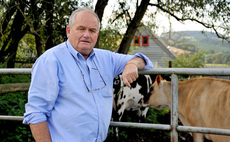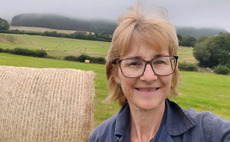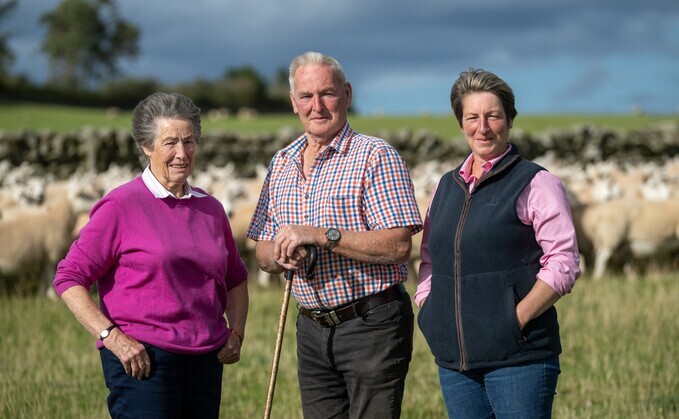
Left to right: Marion, John and Wanda Tilson at Wedderlie Farm.
Run by John and Marion Tilson, and their daughter Wanda, Wedderlie Farm in the Scottish Borders will see visitors descend on the farm this summer, as the family gets ready to host the NSA Scotsheep event on Wednesday, June 10.
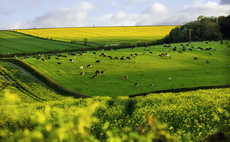
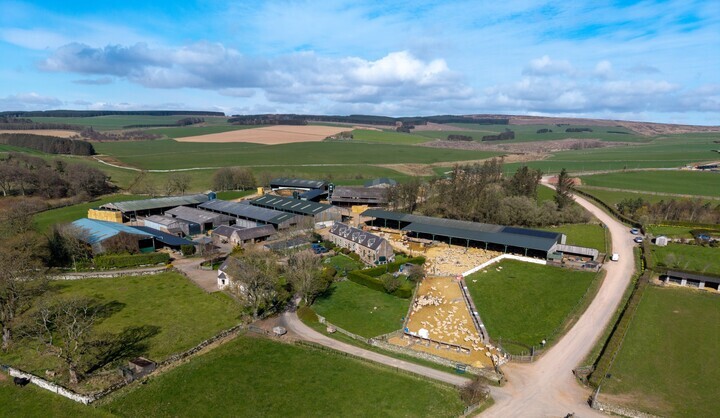
Comprising 1,033 hectares (2,550 acres) and rising from 245 metres (800 feet) to 380m (1250ft) above sea level, the farm includes 485ha (1,200 acres) of rough grazing, 320ha (800 acres) of permanent pasture and up to 32ha (80 acres) of forage crops.
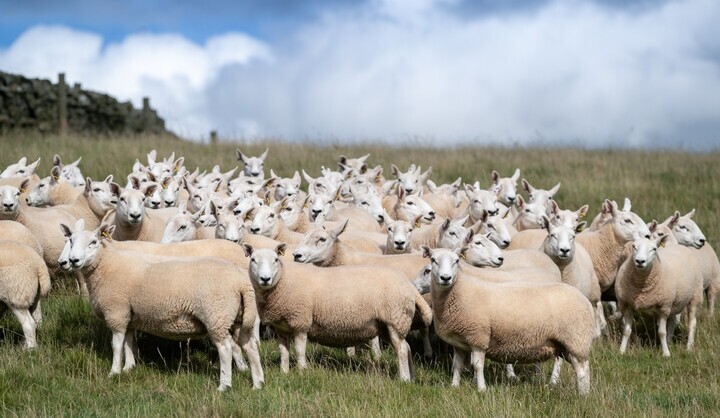
The farm is home to 1,900 breeding ewes made up of Hill Cheviots, Cheviot Mules and a small flock of 25 Herdwicks.
READ NOW: 'Sheep play a vital role' - NFU unveils vision to build thriving sheep sector
A flock of 160 Cheviot ewes under the Wedderlie prefix are kept purebred, with the rest crossed to produce finished lambs and Mules.
Ewes are bred to the Bluefaced Leicester to produce Mules, with Cheviot Mules bred to the Texel, and Cheviot gimmers bred to a Dutch Spotted or Charollais tup for prime lambs.
Lambing traditionally takes place the second week in April, but in preparation for Scotsheep the family are lambing a week early.
The ewes are lambed indoors, and the family have a full team helping, including a night lamber and three workers during the day.
Relying on mostly seasonal labour, the team at Wedderlie includes shepherd Robert Craig and cattleman Andrew Sadler, with casual help from Colin Cessford and Neil Morrison.
READ NOW: Breeding show cattle is a shared passion for Breconshire beef and sheep farming family
A selection of four-crop ewes and Mule gimmers are sold through C&D Auctions, Longtown, while Texel cross ewe lambs are sold through H&H, St Boswells.
Finished lambs are sold direct to a processor with a handful sold through the live market.
The farm now also sells pedigree Cheviot tups. John says: "We use all our homebred tups as shearlings on the hill and then sell them as two-shear at Dingwall and Lockerbie marts."
A predominantly grass-based system, the ewes have access to minerals and feed buckets pre-tupping. After tupping the hill ewes are given feed blocks containing urea to make full use of the poorer grazing on the hill.
After scanning the ewes are fed ewe rolls according to the number of lambs they are carrying and brought inside when they are due to lamb, continuing with the ewe rolls and round bale silage.
Outside of the main flock, the family also buy in store lambs to finish on farm.
READ NOW: Tighter supplies and steady demand support lamb prices
John says: "We usually have a lot of surplus grass here and grow kale, which is perfect to finish lambs on."
Despite being the hosts of this year's NSA Scotsheep, the farm is perhaps best known for its prestigious Wedderlie Aberdeen Angus herd, which was established over 100 years ago.
The herd consists of 220 pedigree spring and autumn calving cows and is a member of the Premium Cattle Health Scheme and is BVD accredited.
The cows come inside mid-October and go back out to graze from the middle to end of April.
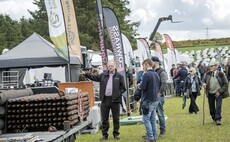
In the run-up to NSA Scotsheep it is all systems go for the Tilson family as they prepare for the event.
John says: "We are hoping to showcase as many sheep and cattle as possible and with 190 trade stands we hope people will find something of interest and really enjoy their day out."
Farm facts
• Wedderlie covers 1,033 ha (2,550 acres) rising 245m (800ft) to 380m (1250ft) above sea level, including permanent pasture, rough grazing and forage crops.
• The flock of 1,900 breeding ewes includes Hill Cheviots, Cheviot Mules and Herdwicks.
• The Wedderlie herd of Aberdeen Angus, founded in 1914, now comprises 220 cows.
• The Tilson family are supported by a shepherd and cattleman.