



At the Environment Agency we have been running farm winter ready campaigns over the past few years aimed at just these kinds of issues. With our climate changing before our eyes, resilience for wet winters is important and having enough slurry storage is a vital part of this.
Sometimes the easiest way to see what's possible is to hear from someone who's done it. For that, we turn to Tom, a dairy farmer in Cornwall. Tom appeared in a short case study video for us, where he talks through some major changes he made to improve his slurry storage following a farm inspection.
Click to watch the video: Getting Set for Winter: A Practical Farm Case Study
Tom's slurry situation
Tom found himself in a situation many farmers will be familiar with. Too much slurry and too little storage. Ultimately, what this ends up with is having to venture out and spread slurry on fields when it is not required by soil or crop. In general terms, there is no soil or crop need for certain nutrients during the autumn and winter months (though there are some exceptions).
There are a lot of issues with spreading outside the growing season:
- It's not compliant with Farming Rules for Water regulations on soil and crop need
- Higher risk of pollution from runoff and soil erosion due to poor weather – minimising risk of pollution is also a requirement of Farming Rules for Water
- Potential damage to soil – through compaction from heavy machinery; this in turn heightens the risk of pollution from run off and, crucially, diminishes soil health
- Waste of nutrients – as Tom notes in the video, he grew a lot more grass by applying fertiliser during the growing season and not wasting it during the winter months
What Tom did
Tom took a range of different measures but for many farmers, they may not all be necessary.
Look at the more straightforward (relatively speaking) steps first – specifically for clean and contaminated water separation, which you can find out more about here. Understanding how much rainfall you receive and rectifying issues with drainage and guttering can go a long way to reducing the volume of slurry you collect. As Tom notes, he was able to roof existing buildings with grant funding, meaning a big improvement made for little or no outlay, and a great deal of benefit to his storage capacity. It's always worth checking what funding sources might be available to help pay for improvements – either through government schemes or other providers.
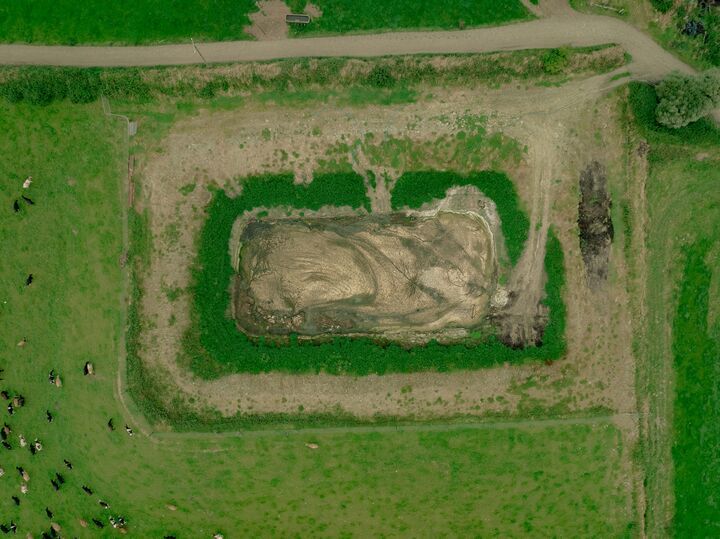
Tom built a slurry lagoon that gave him six months storage for 500 cows. That provided a buffer for his current herd, room for growth and assurance that he wouldn't have to revisit slurry storage on his farm for many years to come. Tom's lagoon was a significant financial investment, but he soon reaped the benefits by buying in much less bagged fertiliser. As he mentions in the video, he is growing a lot more grass by applying slurry to his land at the right time.
Finally, he isn't having to worry about his storage filling up and needing to spread when he shouldn't. This gives peace of mind that he is compliant with Farming Rules for Water and the Silage, Slurry and Agriculture Fuel Oil regulations.
How to get your farm Winter Ready
There is help available if you need to improve your slurry storage. At the Environment Agency, we will always be happy to discuss your situation. We can provide advice and guidance on legal requirements, dealing with excess slurry safely and make sure you are complying with the regulations.
Catchment Sensitive Farming provide advice on possible sources of funding for bigger changes to farm infrastructure and what changes are likely to have the biggest impact for your farm. The Farming Advice Service also provide free technical and business advice on regulatory compliance.
With thanks to Tom and our officer Rob for their time and effort in making this video.
Environment Agency National Customer Contact Centre
Tel. 03708 506 506
Email: [email protected]
Catchment Sensitive Farming: Catchment Sensitive Farming: advice for farmers and land managers - GOV.UK (www.gov.uk)
Farming Advice Service: Environment Agency Winter-Ready Cab Card | Farming Advice Service


