Profile: Ed Bailey, NFU Cymru president

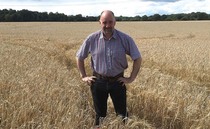
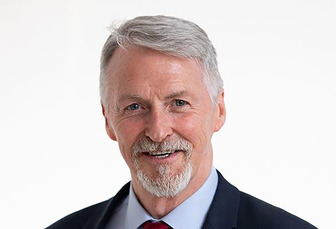
BARRY Alston goes on farm with NFU Cymru’s new president, Ed Bailey who is hoping for a quick resolution to industry’s concerns.

The knock-on effects of the 2007 foot-and-mouth crisis, bird flu, bluetongue and the build-up to the ubiquitous sheep EID imposition adds up to quite an ‘apprenticeship’ during Ed Bailey’s four-year term as NFU Cymru’s vice-president.

Now, as he steps into the presidential role vacated at the weekend by Carmarthenshire dairy farmer Dai Davies, he wonders just what else could be on the horizon during his leadership term.

Without doubt there is one major issue in need of being settled within weeks, rather than months, and stands to affect every farmer in Wales – the provision of detailed Welsh Assembly information on its all embracing Glastir land management support scheme scheduled to come into operation in 2012.

With expressions of interest being required as part of this year’s SPS application form, time is fast running out for farmers to make any informed decisions.

Even Mr Bailey, who has been heavily involved in industry discussions at Ministerial level, admits to being ‘in the dark’ as to where he personally stands when the proposed new blueprint scheme replaces what he considers to be the two vital components of keeping Welsh farming viable - Tir Mynydd hill support and Tir Gofal agri-environmental payments.

Resolution

“It is essential there is a speedy resolution of the industry’s concerns, especially as on-farm pilot studies have seemingly shown there could be more losers than winners,” he says.

“Support payments are a vital part of keeping farming in Wales afloat, given that 80 per cent of the land mass carries less favoured area status.”

What is for certain, too, is that he speaks from the heart, with a very traditional Welsh hill sheep and cattle operation forming the mainstay of his own farming activities.

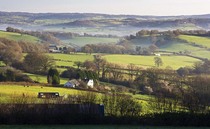
Indeed, there are not many farms where livestock numbers today are lower than they were back in the 1950s - but that is certainly the case on the 2,800 acres he farms in a family partnership overlooking the Irish Sea.

A cut in ewe numbers apart, though, little else has changed in the way both Gors-y-Gedol, at Dyffryn Ardudwy, and Plas-y-Bryn, three miles away at Llanbedr, in Meirionnydd, have been farmed for generations.

Support payments are a vital part of keeping farming Wales afloat

Ed Bailey

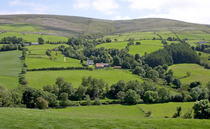
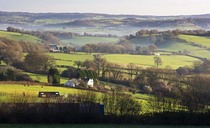
The diversity of the land, ranging from sand dunes to rocky outcrops and running from below sea level in places to more than 2,500ft on the mountain top, means many of the 100 suckler cows and their calves can be kept out all year round, the 2,200 ewes can be lambed outdoors, there is little need for concentrate feeding and labour input is fairly minimal.

In keeping with tradition, too, all the lambs and calves are sold as stores and everything goes through the live auction ring.

“We run a very traditional system or, in other words, a very basic easy care management approach. It works, so why change it for a more intensive and probably problematic approach?” says Mr Bailey.

To a large extent it has been the very simplicity of the system that has enabled him to take on what has already been the union’s four-year vice-presidency stint and now possibly a four-year presidential role – both positions by the geographical nature of Wales demanding a great deal of time being spent away from home.

Another vital element has been the solid support from other members of the family partnership – his wife Helen and brother Will, whose son Ben is also now part of the team.

There are hopes, too, that one day his son, Ed jnr, a chartered surveyor, will also join the business. Daughter, Sarah, is a practice nurse.

Mr Bailey’s parents moved to Wales from a tenanted dairy farm at Cheadle, on the outskirts of Manchester, in 1950 following compulsory purchase by the local authority.

“At that time Gors-y-Gedol was also a tenanted farm but we were able to buy it from the estate in 1962,” says Mr Bailey, who with his brother were, at that time, the only English speaking children attending the local primary school. He is now a Welsh speaker.

The land at Gors-y-Gedol is among the oldest to have been farmed in Britain, dating back more than 4,000 years with one of the finest examples in the UK of a protected neolithic field system which can still be seen from the air.

In the 13th century the then Prince of Gwynedd, Llewelyn Fawr, owned the land. The hall itself, dating back to the 1500s, is hired out for weddings with the family pitching in to provide all-the-trimmings receptions.

“When the family first arrived here we had no experience whatsoever of sheep farming and most of what I know came from a couple of the indigenous workers who came with the farm and we owe them a great deal,” says Mr Bailey.

Augmented

Plas-y-Bryn, where he and his wife live, was bought in 1964, its 160 acres being augmented by rented grazings on the adjacent former World War Two airfield which is still owned by the Ministry of Defence, though now disused following the closure of its aviation testing facilities.

With Meirionnydd one of the pilot areas for the pioneering Tir Cymen agri-environmental scheme, the farm was one of the first participants and is now part of the Tir Gofal successor having renovated large runs of stone walling and safeguarded a wide range of natural habitats.

“Both schemes have meant cutting back sheep numbers from 3,000 ewes to the 2,200 mark, which means we now have less stock than when we came here,” says Mr Bailey.

“But the stony terrain, coupled with the fact that 70 per cent of the farm is classified as severely disadvantaged and 30 per cent disadvantaged, means you cannot farm intensively here even if you wanted to. The conditions are far from kind.

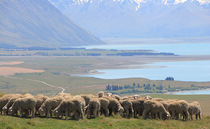
“We keep Welsh Mountains, mostly pure though we have been introducing some North Country Cheviot blood and using a Suffolk ram as the terminal sire.

“Lambing starts in April and we sell all the lambs through the store markets in Dolgellau and Bala. I believe it is essential we maintain the live auction system.

“All the calves from the mainly spring calving Welsh Black cows and got by either a Welsh Black or a Limousin bull are also sold through the markets at 18 to 24 months old and around 450kg.

“Cows and sheep are both considered essential to the farming system, helping to keep the land in better condition.

“Management throughout is based around minimal inputs and only housing stock whenever really necessary. Our stocking rate is very low indeed. In fact, even when we were keeping 3,000 ewes it was only 0.4,” says Mr Bailey.

Hay and silage is made from the 200 acres or so of suitable ground.

Mr Bailey accepts standing up for farming is not going to be easy as he gets to grips with the union presidency - not least facing up to the immediate threat to the existing support arrangements in Wales.

“Without Tir Mynydd payments hundreds of farmers will be hard pressed to continue farming,” he says. “If they go and there is no relevant successor scheme it will be a terrible blow - with some serious consequences.

“It will not only affect the present day-to-day running of farms but the future as well because there will be no means of keeping the next generation of farmers at home.”

Have your say

Mandatory
Mandatory
Mandatory

Farmers Guardian newsletters

Get the best of Farmers Guardian delivered straight to your inbox. Click here to sign-up today