Big dairies does not mean bad welfare, says RSPCA
LARGE-SCALE dairy farms are not inherently bad for animal welfare, according to the RSPCA.
The RSPCA’s deputy head of animal science, John Avizienius said US dairying had shown large dairy units can exist with good welfare conditions - sometimes better than those seen on smaller farms.
He said: “I visited some of the large dairy units in the US and my overall impression was, in terms of welfare, I was impressed. To see the leel of attention those animals were getting astonished me.
“It is very easy to pre-judge these things but whatever the size of the unit, it doesn’t dictate the welfare conditions.
“The cows I have seen in some of these units are in a better condition than some that I have seen on extensive, grass-based systems so the comparison is misleading.”
He said while there may be welfare issues at some large dairies, this was usually a problem with the individual units and not with the systems themselves.
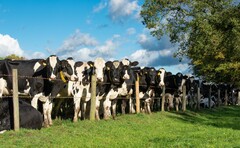
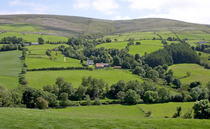
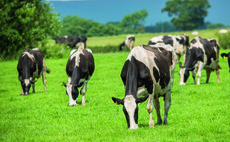
He said the ‘idyllic image’ of dairy cows roaming free on pasture was misleading and contrary to the messages put out by some groups, may not be the best for animal welfare.
“Grass-based systems are not a panacea for animal welfare; there are so many other factors to consider.
“Those groups who are against agricultural progression will say that it is better and will vilify the more intensive systems, when in fact these might be better for animal welfare.
“What we need to do is update our knowledge of the dairy cow – we need to find out in what circumstances it is better for the cow to be housed and when it is better for her to be out, but we can’t make blanket statements that they should be out all the time.”
His views are in contrast to those expressed by other, more extreme groups such as Vegetarians International Voice for Animals (Viva!) which claims large units like the one proposed by Nocton Dairies were inherently bad for welfare.
However, the RSPCA has said it does not support systems ‘which house dairy cows 365 days a year’ and still has some reservations about US-style dairies.
A spokesperson said: “While there is evidence that these large dairy units in America can make cows comfortable and can look after their welfare up to a point, they are not without drawbacks. The lack of space and lack of opportunity for social interactions are just two. The American systems as seen would not work in the UK.”
Viva! campaigns manager Justin Kerswell said it would ultimately be up to consumers to decide, and he hoped they would vote with their wallets should the Nocton plans get the green light.
He said: “We are hearing from a lot of consumers who want to know where their milk is coming from and consumers will simply stop buying dairy products if they think it comes from farms such as this.
“US consumers have accepted it as a fait accompli but I don’t think consumers here will fall for that.”
View results 10 per page | 20 per page


We are urgently developing research requirements with other European laboratories to make sure we understand and the disease (Schmallenberg) better.
Readers' comments (11)
John Avizienius | 12 August 2010 10:48 am
" The comments attributed to myself in the article above, were generic comments about the concept of large dairies, and not about the Nocton planning application. The RSPCA does not get involved in individual planning applications, but the way that the comments have been represented seems to insinuate that the RSPCA is backing the Nocton planning application. This is misleading and untrue.
Our position is quite clear, and is mentioned in the article, and that is just because a unit is large does not mean that the welfare is bad.
If we look at other types of livestock production such as laying hens, pigs and meat chickens we could also assume that just because they have got bigger, that the welfare has got worse, which given the evidence, is not always the case. In the future, with the information that we will get from welfare outcome assessment visits, we will be able to make more informed statements about the welfare of the animals in any particular production system. This will then allow us to debate issues based on the facts, rather than relying on hyperbole and misinformation, and develop conclusions about whether the animals have had a good life, a life worth living or a bad life "
Unsuitable or offensive? Report this comment
Anonymous | 12 August 2010 12:10 pm
Arguing that animals are treated well so long as conditions are good throughout their life until the moment of slaughter is like saying its okay to shoot jews so long as their life was good up to that point. I have been Vegan for 24 years. Not only is meat totally unneccesary for human survival (and pleasure), it is harmful, and the agriculture industry has been cited as producing more greenhouse gasses than all of the worlds transport systems put together. I dont believe this diary farm or any can ever claim to have good standards of welfare. Animals are not our slaves and no not deserve to be treated like them.
Unsuitable or offensive? Report this comment
DaisyMae | 12 August 2010 4:56 pm
I'm quite upset that my comment got deleted - why?
Unsuitable or offensive? Report this comment
Mike | 12 August 2010 7:30 pm
John Avizienius and the RSPCA treat animals as simply commodites. Mr Avizienius your organisation says it cares about animals yet advocates their killing and serves them up at fund raising dinners. You also have a patron who kills animals for fun.
Unsuitable or offensive? Report this comment
Anonymous | 12 August 2010 10:03 pm
we produce milk on our farm, and we like to believe that we have the cows best interests at heart. I do agree that milking cows is not the most humane. Sure we take the calf from the cow- but we allow the mother to be still able to return to her calf after each milking. This reassures both- and causes less stress. But our cows grow quite old on our farm, some reaching 20 years plus- which is a nice existance, they even go grey too. But our cows choose when they want to graze grass in the spring- and also when they want to be in the sheds in a few weeks time. We open the doors- and the cows can choose field or shed.
Im not for the creation of 'factory' milk. 8000 herd farms are only about driving down prices further and pushing animals further with yields. Cloning will be next- and then what?
But I dont agree with the views expressed by some that farming is a cruel place.
A spider traping a fly- looks pretty torturous to me- and also any meat eating animal- has to capture, kill, and ripe apart flesh to survive. Farming can be done with high regard, respect and welfare to animals. I agree some farms have a long way to go, but maybe that should be our next goal- rather than cost cutting and yield chasing.
Maybe if more people were aware of the huge problems farmers face with regards pricing, and processors controlling the market; price rised could also be met by increases in animal welfare?
Unsuitable or offensive? Report this comment
Mark Brice | 13 August 2010 8:35 am
Fight the mega dairy!
It's yet another american dream forced upon us!
Fight the plastic food revolution and the evil that the supermakets portray as normal.
Cows live in fields and eat grass, this provides us with the milk we need.
Don't let big business and corporate minions tell you otherwise.
The only ones to benefit will be THEM, and their profit margins.
They want a compliant plastic generation.
Don't give it to them!
Think...................
THINK !!!!!!!!!!!!!!!!!!!!!!!!!!!!
Unsuitable or offensive? Report this comment
Anonymous | 13 August 2010 9:42 am
WSPA and CIWF are way ahead of the RSPCA in this and I am going to withdraw my support and membership of the RSPCA who are clearly not what they seem.
Unsuitable or offensive? Report this comment
Anonymous | 13 August 2010 2:59 pm
I withdrew my support from them last night. I have been in a mornal dilema not knowing whether to or not as I knew before now that the RSPCA was a backwards organisation (and after seeing the ridiculous Think Pig campaign) - but this did it for me.
RSPCA - you do every farm animal a disgrace and disfavour in your work. You advocate the red tractor knowing this literally just means the animals are from the UK and therefore means little guardante on welfare and animals can still live hellish living and slaughtered inhumanley. Your Freedom Food assurance means nothing for the animals welfare and farms have been investigated showing this. And now you do not full heartedly disagree with factory farming.
Shame on you.
Unsuitable or offensive? Report this comment
Julie from Nocton | 14 August 2010 5:16 pm
I have paid monthly subscriptions to RSPCA for over 30 years. I have put up with the waste of money in posting pamphlets to me but I guess my hard earned money went towards paying for John Avizienius to fly to US only to be impressed. Let's face it why would the factory farmer not ensure their cows could not deliver the goods. It seems to me that the RSPCA has missed the point on animal welfare and has gone native. I will be stopping my support to this outdated and uncaring organisation.
Unsuitable or offensive? Report this comment
Heather Berry | 15 August 2010 6:58 am
There's a lot of angst in every direction here. Whike I'm sure it's true that humans can live without meat we have canine teeth, which are for the purpose of tearing off chunks of meat and our digestive systems are onmivorous.
I've been thinking about this a lot and if we all became vegetarian/vegan it would take a tremendous amount of space to rpovide for our food needs.
I was raised professionally to work by the evidence and just because we don't like what we're told about the evidence we really shoudn't rubbish it. Less of the hysteria I think, please.
Unsuitable or offensive? Report this comment