Ruthless approach to breeding builds pedigree reputation

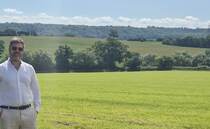
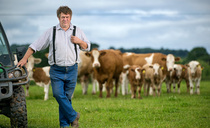
Attention to detail and high health standards are helping build a solid reputation for Richard Maudsley and his Littlebank British Blue herd based near Settle, North Yorkshire. Neil Ryder reports on his approach to breeding quality pedigrees.

With the aim of producing high quality stock for commercial breeders, Richard Maudsley is keen to take a ruthless approach to breeding decisions.

“We are ruthless in that any pedigree animal with faults, however good it may be otherwise, is sent for slaughter so it can never be used for breeding elsewhere,” he says.

While he is not currently using any weight recording programmes, he says he may look to do something in the future.

“Health is important to us and is a valuable marketing tool for both our pedigree and commercial cattle.

“We have joined the SAC Premium Health Scheme and are working towards accreditation for BVD, IBR, leptospirosis, and Johne’s disease. There is also a strict quarantine and vaccination protocol for any bought-in cattle.”

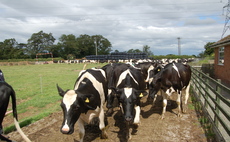
While still a relatively small herd of 15 pedigree cows, plus his herd of about 30 British Blue cross Holstein suckler cows put to a Blue stock bull, Mr Maudsley’s interest in the breed started with the purchase of a single bull.

He farms 91ha (225 acres) of owned land at Little Bank Bungalow, Rathmell, Settle, and rents a further 11.5ha (28 acres) of severely disadvantaged area (SDA) limestone moorland above Settle.

From this month he has also taken on a further 12ha (29 acres) of rented land adjoining the home unit.

Changing breeds

Mr Maudsley used to calve more commercial sucklers - about 60 or 70 - but decided to cut back because of CAP reform.

“I became interested in British Blues as we wanted something a little calmer than the other continental breed we had at the time,” he says.

“Then, 12 years ago, we bought the bull Greystone Navigator, a grandson of Herpine - one of the first female Belgian Blues to be imported to the UK.

“The Coates family of Stainforth, who bred and sold us Navigator, had a large suckler herd so knew the type of bull needed for commercial use.”

Shortly after this, Mr Maudsley started looking for a female line to breed his own bulls from, and this led to the purchase of Ballee Treat, an Irish-bred cow sold at Carlisle.

“Simply we wanted to breed powerful bulls with good frame, length and muscle, as well as good legs. We also liked the Blue females for their milkiness, although occasionally they could give a little too much milk.”

He says the pedigree females are now a mix of home-bred and bought in animals and he selects for type rather than following specific bloodlines.

“Among other things, we are looking for good length and strong legs, but do not want extreme muscling - a type of female that will last well.

“Easy calving is important to us, but we accept we will have to have some caesareans with the pedigree Blues, partly to play safe in view of the potential value of the calves.

“With the 30 cross-bred suckler cows, we had just two assisted calvings this year.”

The cross-bred bull calves are reared and sold entire at eight-months of age and at the moment most heifers are kept for breeding, with the rest sold at about 12 months of age. The ommercial cattle are sold through Skipton market.

Winter rations

“All cattle are housed for the winter on big bale silage and a little concentrate according to their condition,” says Mr Maudsley.

“Bull calves have ad lib creep feed until they are ready to go and heifers get about 2.5kg of a beef ration, plus some silage, until they are ready for sale.”

He says the pedigree calves are creep fed from the first couple of weeks of age and weaned using a pre-conditioning programme, depending on size.

“They are then allowed to tick over, followed by a season grass. This is to give the animal the chance to develop its frame, including strengthening the legs and making for a healthier animal.”

About six months before the pedigree sales, Mr Maudsley begins feeding them up to five times a day, making sure they clean up each time.

“We may go up to six times a day nearer the sale using concentrate and a little silage. We use the same beef compound throughout, just adjusting the levels. This keeps things simple, but also means we can buy one ration in bulk, giving us savings over buying smaller quantities of different rations.”

The farm’s nutritionist, John Hickson from Dugdale Nutrition, says this early creep feeding helps develop the rumen.

Dietary starch

“Richard uses a top quality high starch compound with three forms of starch, yeast and a rumen buffer. It also includes three cereals - wheat, barley and maize.

“The feeding is ad lib, but works out at about 3-4kg per head per day. Using the same feed throughout has the benefit of consistency, reducing the risk of any checks from changes in feeds.”

Mr Maudsley says he aims to have the pedigree cattle ‘looking as good as possible’ for sale, but he never wants them to be over-fed.

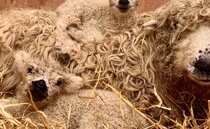
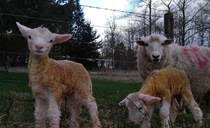
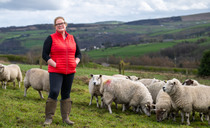
The sheep enterprise is strictly commercial, based on bought in North Country Mules and home-bred Texel cross Mule ewes put to Beltex cross Texel tups.

He lambs the flock, scanning at about 200 per cent, in March, and around 185 per cent lambs are reared.

Sheep flock

The flock lambs indoors and every effort is made to foster additional lambs to make up two lambs per ewe. All lambs, apart from any ewe lambs retained for breeding, are finished and sold through Skipton auction mart.

While Mr Maudsley may increase the suckler herd, he says he will probably keep sheep numbers the same.

“There is a good case for keeping heifer calves and taking two or three calves off them before sending the cows for slaughter. Producing calves with show potential is another area we would like to try.

“With the pedigree British Blues we will look at limited flushing to make better use of our best genetics.

“Numbers will stay about the same. I would like to try some showing of commercial cattle, and maybe pedigree, but at the moment just do not have the time.”

Farm facts

  • Rainfall: 1,016mm (40in) annually
  • Other business: Mr Maudsley also runs a contract spraying business covering about 1,010ha-1,214ha (2,500-3,000 acres) annually, mainly grassland and cereals for wholecrop
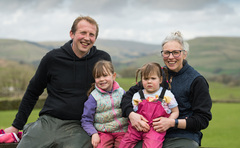
  • Family: Wife, Wendy, twin 15-year-old daughters, Ellie and Beth, and a 12-year-old son, Thomas
  • Land: Most of the farm is river bottom land over sand and gravel, although there are some heavier areas. The farm takes in 30ha (74 acres) of HLS, including part of the Ribble Wading Bird Scheme, with the rest of the farm under ELS
  • Fertiliser usage: Kept to a minimum, with soil analyses to ensure lime, P and K levels are maintained, then full use made of farmyard manure. Ten years ago, around 25 tonnes of nitrogen fertiliser were bought each year - now the figure is nearer 15 tonnes or less. Some clover-rich leys have also been sown


Have your say

Mandatory
Mandatory
Mandatory
Mandatory