Bovine TB found in sheep and wild boar
CONCERNS that bTB is becoming increasingly prevalent in species other than cattle and badgers have been heightened by the discovery of the disease in sheep and wild boar.
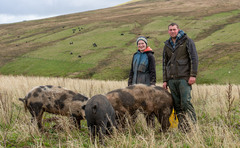
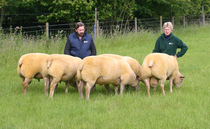
It has emerged that a flock of Lleyn sheep in Gloucestershire has been placed under TB restriction.
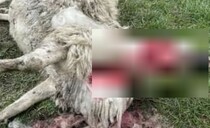
Vets were alerted by chronic weight loss in 20 of 220 ewes and one ram. Postmortem findings in three of the six sheep were consistent with TB and M. bovis spoligotype 10, the predominant strain in local cattle herds and wildlife, was subsequently isolated. Lesions in these three sheep were ‘extensive’, a letter in the Veterinary Record reports.
A Defra spokesman said the movement restrictions would only be lifted when Animal Health was confident that the flock is free from TB. He said M. bovis in sheep was ‘considered rare’.
The Department has also revealed that ‘lesions consistent with TB’ have been identified in a feral wild boar in the Ross-on-Wye area during post-mortem examination by the Veterinary laboratory Agency (VLA).
Defra figures show there were over 140 bTB cases identified in individual animals other than cattle in 2009, including in 68 alpacas, 26 cats, 23 pigs and five sheep. The true numbers are almost certainly much higher as there is no active surveillance in non-bovine species.
Defra said most other species ‘generally act only as spillover hosts’ from cattle and badgers with disease not sustained within populations without an external source of infection.
National Sheep Association chief executive Peter Morris said cases in sheep were ‘not unexpected’ and that the industry was not required to take additional actions.


I’m fed up with talking about the weather, but I can console myself with the fact we have grabbed every opportunity so far and progress is not too bad.
Readers' comments (9)
Anonymous | 18 March 2010 12:51 pm
Do spillover species include humans? Not for older people because most of us were given the BCG jab when we were 11 or 12 years old, and this provides us with a significant level of immunity against bovine TB. But BCG vaccination has been abandoned during the past decade in favour of targetted vaccination in inner city areas where immigration poses a risk in terms of human TB. This means that in rural areas, where there is a risk of contracting bTB through direct and indirect contact with cattle or wildlife, young people are no longer protected against the disease, and there is no longer any widescale monitoring done via the Heaf test. This is something that health professionals in rural areas should be giving serious thought.
Unsuitable or offensive? Report this comment
sally Hall | 18 March 2010 2:18 pm
The risk of humans contracting bTB is, according to the WHO, negligible . Anyone who has an interest in bTB should read the recently published ‘Public Health and bovine tuberculosis – what’s all the fuss about’ by Paul R Torgerson and David J Torgenson. It is a very well researched and referenced article, which concludes that bTB control in cattle is irrelevant as a public health policy and there is little evidence either for a positive cost benefit in terms of animal health of bTB control. It suggests that such evidence is required; otherwise there is little justification for the large sums of money spent on bTB control in the UK. It is time for a radical re-think on policy. We already have reports that conclude culling of badgers is not good value for money. Over the last decade or so badgers seem to have occupied a disproportionate amount of time and resources at the expense of a more sustainable, lasting solution for cattle. An unpopular cull, which is now proven to be a waste of tax payers’ money, as well as not being properly backed up by reliable scientific evidence, is bad publicity for farmers and may even have serious implications for tourism and food industries if an angry public decide on boycotts.
Despite a compulsory testing regime for some fifty years, we are told bTB is now endemic in many areas of the UK. This is based solely on the results of a skin test for cattle that has not really changed since it was originally developed and that many now believe may not be as reliable as is claimed. How accurate and up to date is the scientific data behind the claims of its sensitivity and positive productive values? Less than 30% of cattle slaughtered under the existing skin test system are shown to have bTB. Whilst reasons are given for this, they are weak and open to challenge without substantive scientific evidence, which is not made available. It is interesting to note that despite the claims that the disease is now out of control, few people ever contract the disease - even farmers, testers, vets, abattoir workers etc who are in regular and close contact of supposedly infected animals - and many farming families drink their own milk raw, before it is pasteurized. It is generally accepted that nowadays bTB poses negligible risk to human health. The existing policy is all about maintaining TB free status and protecting exports. It is concerned mainly with meeting targets and deadlines, not protecting human or animal health and welfare. Whilst the government ministers and bureaucrats are busy claiming how successful the TB Health Check Wales has been, the very significant costs for those adversely affected, have been largely ignored. It would probably not be tolerated in any other sector but most farmers are held to ransom because of fear of financial penalties. Are there now too many vested interest groups keen to see the existing system continue for as long as possible?
The human form of Tb has been controlled adequately for decades, so why, after so many years and millions of taxpayers’ money already spent, is there still no vaccination programme for bTB? As the two disease are so closely linked surely the efficacy of such a programme would be similar to the claims made for the existing, unreliable and very time consuming skin test system? Surely the best way forward is for a vaccination programme for cattle to start without further delay and for farmers and unions to be campaigning strongly for this and the necessary change in EU legislation to facilitate?
Unsuitable or offensive? Report this comment
sue | 18 March 2010 2:24 pm
Ross on Wye is in Herefordshire.
Unsuitable or offensive? Report this comment
Huw Thomas | 18 March 2010 3:12 pm
Well Sue in Ross on Wye, good luck in your quest to trap and vaccinate every TB infected badger in west Wales. I recommend wellies and thick gloves :)
Unsuitable or offensive? Report this comment
Anonymous | 18 March 2010 6:44 pm
What about the curent case in east yorkshire that was in pigs but dethra seem to be keeping stum about it.
Unsuitable or offensive? Report this comment
Hugh Jones | 18 March 2010 7:01 pm
Anonymous | 18 March 2010 12:51 pm
Do spillover species include humans? Not for older people because most of us were given the BCG jab when we were 11 or 12 years old, and this provides us with a significant level of immunity against bovine TB. But BCG vaccination has been abandoned during the past decade in favour of targetted vaccination in inner city areas where immigration poses a risk in terms of human TB. This means that in rural areas, where there is a risk of contracting bTB through direct and indirect contact with cattle or wildlife, young people are no longer protected against the disease, and there is no longer any widescale monitoring done via the Heaf test. This is something that health professionals in rural areas should be giving serious thought.
Quote
Different virus ,the vaccine will not help you ,
Unsuitable or offensive? Report this comment
Anonymous | 18 March 2010 11:06 pm
bTB is not a virus, it is a bacteria.
The BCG vaccine is based on the bovine form of the disease and provides (various levels) of immunity to both human and bovine TB.
Unsuitable or offensive? Report this comment
Anonymous | 18 March 2010 11:10 pm
bTB is a Mycobacterium (a type of bacteria and nothing like a virus which is a completely different lifeform)
In an above comment the skin test is dismissed as having previously been unsuccessful in eradicating bTB, and comparison is made with a supposedly successful human TB eradication programme. But by the 1970s bTB had been virtually eradicated from the UK in cattle using just the skin test, and has been eradicated in other regions using the same method (including most of the developed world), so it is effective. The reason the skin test worked in the UK previously was because of the relatively low density of badgers (except in the few places where badgers were high in density, which is where the disease persisted and is precisely why badgers were identified as disease hosts in these areas in the early 1970s).
We now live in a countryside where badger numbers have risen unbelieveably, which is a great conservation success story. But they have risen in number more than anyone imagined they would, to the extent that they are now a dominant predator and omnivore in our ecosystems, are harming other species, and are a major host for bTB. So the problems that led to the failure of the skin test in areas such as Gloucestershire in the 1960s have now been replicated in other parts of the country, with cattle movements introducing disease into new areas, and vastly increased badger populations acting as a reservoir that makes the skin test almost useless.
Once the disease is endemic in badgers the only options, give that badgers and cattle share the same fields, are to control both species (badgers and cattle), remove cattle completely, keep cattle in laboratory condition sheds 365 days a year, or vaccinate.
Vaccination would be the ideal solution (notwithstanding the damage badgers have done to other species by dominating food-chains, including the eradication through intraguild predation, of hedgehog populations). But there is not yet an economically viable way to vaccinate badgers (there is no doubt that the vaccination trials happening in England are far less economically viable than culling), and vaccinating cattle would cause all cattle to be categorised as bTB positive under EU rules, because the EU does not recognise any (currently very expensive) tests that can distinguish between vaccinated and positive animals. Vaccinating badgers is currently more uneconomical than culling, and there can be no doubt that vaccinating cattle would cause a collapse in the UK's farming industry, which would be catastrophic for rural economies, with an impact on the environment that urban dwellers would not appreciate.
And, of course, there are major risks for humans associated with ignoring disease in cattle (despite what is suggested in above comments) and allowing food from diseased animals to enter the food-chain in a world that, as has previously been pointed out, no longer vaccinates children against TB.
Above all else, why should we worry so much about a cull of badgers that will in no way threaten their existence in the UK, when we make no noise whatsoever about culling rabbits, rats, and deer for other disease and environmental damage prevention purposes? There can be no logical reason other than our natural tendency to differentiate between animal species due to subjective and illogical perceptions.
Unsuitable or offensive? Report this comment
Anonymous | 23 March 2010 6:18 pm
My husband remembers when TB was almost eradicated in the South West back in the 60's
Back then farmers would when appropiate go out and keep the numbers of pest's down. NOT take them out ALL together but just cull a few. NOW we have a major issue with too many and not enough food to feed the growing population.
It is unfortunate that WE in the country with our traditions which acutally kept a safe countryside are being TOLD by those who don't understand WHY we do things that this problem is becoming insurmountable. BUT then if one lives long enough the fads and fancies go around in a big circle. And hopefully the right solution will be taken and acted upon.
Unsuitable or offensive? Report this comment