Tories would begin to cull of badgers 'almost immediately'
POLITICS has always appeared to be at the heart of the long and bitter debate over badgers and bovine TB. Alistair Driver reports on why the imminent General Election could now determine future bTB policy in England.
The outcome of the most bitter and protracted debate in farming, whether or not badgers should be culled to control bovine TB, could finally be resolved next spring.
With the next General Election expected to take place in May, it appears the choice made by millions of UK voters will determine how the disease is tackled in England for the foreseeable future.
The Conservatives lead opinion polls by a huge margin and are hot favourites to win with the bookmakers, who are offering odds of just 12 /1 on for a blue victory.
The recent clear, unambiguous statements by senior Tory figures, including leader David Cameron and Shadow Defra Secretary Nick Herbert, committing the party to a badger cull, therefore, have real significance.
It was not always like that. Until recently the Conservatives, with Mr Herbert’s predecessor, Peter Ainsworth at the helm, often appeared even more uncertain on the badger issue than the Government.
In a sign of how seriously the party is now taking the issue, veteran Shadow Agriculture Minister Jim Paice has been given the task of developing a detailed badger culling policy for England, so a new Tory Government can hit the ground running.
“We would hopefully get on with it almost immediately,” Mr Paice says. “I really do not want this hanging about any longer. Twelve years ago, 3,000 animals were being culled. It has now rocketed to over 40,000 and the Government has just sat idly by and done nothing.
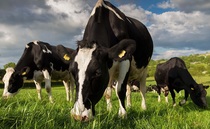
“We cannot go on with the absurd situation where we are killing more and more cattle every year and getting nowhere.”
Mr Paice denies a shift in policy, insisting the party has always advocated a badger cull, but accepts the rhetoric is ‘probably more robust’ now than it was under Mr Ainsworth.
He is working closely with farm leaders and is closely following the progress of the TB Eradication Group as it pieces together a proposed TB strategy for England.
On the ground
Mr Paice recently toured the South West, where he met with farmers on the ground who would be involved in implementing the policy, and is due to visit Ireland to gain a deeper understanding of its badger culling policy.
In keeping with his qualified statement on the timescale, however, Mr Paice acknowledges ‘a lot of issues of detail need to be resolved’ before the policy can be implemented.
“We are working with interested parties to try and resolve those issues, like how you would go about it, what methods of culling you would use, how you would target the culling, who would do it and who would oversee it,” he says.
While reluctant to divulge too much detail of an evolving policy, what is ‘clear’ is it will start in a South West hotspot area.
He identifies the flagship VLA9 project in Devon, where farmers have already come together over a large area to show their willingness and ability to implement a cull, as ‘one obvious possibility’.
We want to … concentrate to the best of our ability on culling only those badgers that are infected
Jim Paice
“But if as a result of the work, we and the Eradication group are doing, we can see a very straightforward approach, there is no reason why it might not be rolled out in more than one place,” he says.
One of the most intriguing elements of the plan is an insistence on ‘targeted’ culling.
While clearly politically advantageous, the term appears to go against the Independent Scientific Group (ISG) 2007 report’s conclusion that only widespread badger removal over large areas could bring benefits in terms of cattle health.
Mr Paice says he is treating the ISG’s work, which was so influential in dissuading Defra Secretary Hilary from culling badgers, ‘with a pinch of salt’.
“I don’t think (ISG chairman) John Bourne’s conclusions are borne out by his evidence. I find it hard to work out how he drew his conclusion,” he says.
The trials, on which the conclusions were based, were ‘poorly organised and disrupted by foot-and-mouth and slow culling rates’, he adds.
He explains by ‘targeted culling’, the Tories intend to use ‘local knowledge’ of farmers to cull, as far as possible, only sick badgers. He suggests a hand-held testing device, known as the PCR test, could assist this aim, subject to the results of trials due to finish next year.
“We are not talking about targeting on a small scale but if you talk to the people involved in VLA 9, which is a very large area, they believe they can target just the sick badgers using local knowledge,” he says.
“We don’t want to eliminate badgers completely from the English countryside. There maybe small areas where infection is very high and it is the only option.
“But, if at all possible, we want to avoid it and concentrate to the best of our ability on culling only those badgers that are infected.”
Perturbation
Badger campaigners and scientists, who will claim partial badger removal is a recipe for disaster due to the perturbation effect, will challenge the Tories on this.
“Quite clearly you do have to cover quite a substantial area but perturbation is only a serious issue if the animals moving around are infected,” Mr Paice says. He is looking at what sort of boundaries, beyond the likes of rivers and major roads, could be utilised to minimise perturbation.
This includes vaccinating badgers in a ring around the culling area ‘so any badger that moves into the culled area will be free of infection’. “If that happens perturbation is no issue at all,” he says.
In terms of how the culling is done, Mr Paice appears to have ruled out gassing, currently off limits due to animal welfare concerns, but not snaring, the controversial method used in Ireland.
“There are only three lawful options - cages, snaring and shooting. None is ideal. I suspect the answer will be a combination of the three,” he says.
Mr Paice makes it clear there will be no additional funding to support a cull, given the current squeeze on public finances.
Farmers will have to fund culling activity on their land, although Mr Paice is clear Defra and Animal Health should oversee the policy.
“I do not believe a free-for-all is acceptable. It must a properly controlled programme.”
Any extra taxpayer funding for this will have to be found from somewhere else in the budget, he says.
Mr Paice acknowledges it is a ‘very politically sensitive and difficult subject’ but is adamant the Tories will not be deterred by fear of a political backlash.
He points out a Tory badger cull would only require an amendment of current policy to allow licences to be issued by Natural England, and not primary legislation, and therefore a Commons vote.
He also refutes the suggestion that his party might find it harder to act when in power than to talk up a policy while in Opposition.
“Nobody wants to go around culling large numbers of animals but the challenge of being in Government is to take difficult and unpopular decisions for the long-term good of the country,” he says.
“Of course, it is easy to say these things in Opposition but the prospect of power is quite sobering. In the last few months Nick Herbert, David Cameron and I have all repeated we will cull badgers and we are determined that is what we will do.
“The only issue now is to decide how we go about it.”
How Tory views have changed
Anyone who seriously thinks that any political party is going to sanction the wholesale slaughter of badgers is in cloud cuckoo land. It isn’t going to happen.
Peter Ainsworth, former Shadow Defra Secretary at the 2006 Tory Party conference
It is time we had a proper TB control policy and I think a cull of badgers will need to be part of that policy.
Shadow Defra Secretary Nick Herbert at the 2009 Dairy event


We are urgently developing research requirements with other European laboratories to make sure we understand and the disease (Schmallenberg) better.