Intensive agriculture is the green option
A WELSH think-tank has recommended intensive dairy, beef and sheep farming as the best way to reduce agriculture’s greenhouse gas emissions.
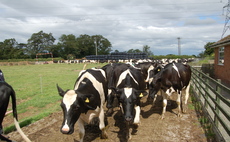
The report published today (Friday, March, 5) recommends an especially radical approach to dairy and beef farming where the nation’s cattle herd would remain housed and its methane emissions captured and used as fuel.
By 2040 the report says agriculture and land use sectors could make substantial progress to carbon neutrality.
Welsh Assembly Rural Affairs Minister, Elin Jones, set up the Land Use Climate Change Group last year to consider how agriculture and land use can reduce climate change and adapt to it.
Chaired by Professor Gareth Wyn Jones, the former director of the Centre for Arid Zone Studies at Bangor University, the group was asked to look at the opportunities for farming and forestry businesses.
Its findings recommend a set of four initiatives by which it says Wales can maintain its food production potential while at the same time cut emissions.
Key elements are:
- the introduction of on-farm anaerobic digestion plants to reduce methane emissions;
- improving farm productivity, including more efficient use of manure, fertilisers and energy;
- the expansion of woodlands over a 20 year period by around 100,000 ha from the present 284,000 ha; and
- the development of renewable energy sources, such as small-scale hydro, wind and biomass plants.
The report’s emphasis throughout, however, is on maintaining intensive dairy, sheep and beef sectors while diversifying and increasing vegetable crops.
In the longer term the group recommends the development of a housed cattle herd.
“Given the complexity of the issues, involving not only the emission of carbon dioxide but also two other important greenhouse gases, methane and nitrous oxide, the group has been faced with a major challenge,” said Professor Gareth Wyn Jones.
“But it is our judgement as a group that the components of the recommended scenario offer a positive way forward which will not only achieve a major cut in net emissions by about 2040 but also contribute to the sustainability of rural Wales by generating additional income streams including from micro renewable energy generation.”
Welcoming the group’s report Elin Jones said that climate change remained one of the biggest challenges facing our generation.
“How we manage our land will play a crucial role in cutting greenhouse gas emissions and adapting to climate change.
“Farming accounts for approximately 10 per cent of Wales’s greenhouse gas emissions and if we also consider food processing, retail and waste, this figure increases considerably.
“I will now consider in detail the report’s recommendations,” she said.


As one Defra agency appears to be finally learning the painful lessons of IT rollouts gone wrong, another seems to have walked into the same trap.
Readers' comments (1)
Alwyn Davies | 20 March 2010 10:07 am
The people behind this mad scheme to house our cattle seem ignorant of recent developments which appear to prove what some of us have said for years: that the entire man-made warming myth is nonsense with no basis in real-world science. If we want to get rid of global warming then get rid of the flawed computer models which are programmed to suggest it and the “scientists” who appear to have sold their souls for a research grant.
Unsuitable or offensive? Report this comment