BSE to FMD: Outgoing NFU director general has no regrets

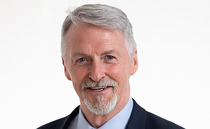
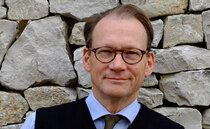
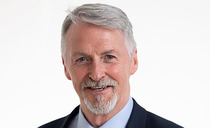
RICHARD Macdonald leaves the NFU later this month, after three decades with the organisation. Reflecting on an extraordinary career, he imparts his thoughts to Alistair Driver.

In the pithy phrase, “I am just an ordinary farm boy who has got lucky,” Richard Macdonald tries to sum up an extraordinary three decades at the NFU, including 13 years as its director general.

Throughout our hour-long conversation in his Stoneleigh office, he repeatedly seeks to play down his part in the NFU’s successes.

In reality there has been very little ‘ordinary’ or ‘lucky’ about the life and career of the man born and raised in east Africa who has led the NFU through the most turbulent period in modern farming history.

Mr Macdonald leaves the NFU at the end of this month with, he admits, ‘horrible mixed feelings’.

“I have had a lousy last month or so but I am comfortable with my decision - I know it’s right thing to do - but I love this job to bits,” he says.

That he is only 55, relatively young to be walking away from a successful full-time career, is a reflection of how the job has utterly consumed his life. A typical day sees him on the road by 6.30am and he is ‘virtually never’ home before 8.30pm and ‘often’ after midnight.

He typically spends a night or two a week away from home.

“It is a very demanding job physically. It is non-stop and very tiring. I get out of bed and start thinking about NFU and farming issues,” he says.

“I just feel I have done my time. I am still positive about the job but I don’t want to do it until I am cynical.”

No expectations

He began his NFU career in the late 1970s, he admits, with ‘no expectations’ and no career plan.

He had arrived in England as a teenager, via a brief stay in Australia, after his family was forced out of Tanzania, following its independence.

He retains a close attachment to the country of his birth. “I adored Africa and have incredible memories of my childhood,” he says.

Following a degree in biology and bio-chemistry from London University and a brief stint working in France, a friend’s father alerted him to some graduate training posts at the NFU.

“I gave it a whirl. To my surprise I got the job and never left. I was just a tea-boy at first, the lowest of the low,” he says.

But he worked his way through the ranks, initially in London as a Parliamentary adviser and then in the South West as Devon county secretary and, from 1989, regional director, a role he says was ‘the making of me’.

But in 1992, London called again and Mr Macdonald reluctantly agreed to return to headquarters to become director of membership and regions - despite the desire of his family to stay in the South West.

By 1996, Mr Macdonald, still in his early 40s, was named as the successor to David Evans as NFU director general. It was to be the start of a tumultuous 13 years for both him and the farming industry.

Mr Macdonald has certain dates etched on his mind, March 20, 1996, the day Health Minister Stephen Dorrell announced the likely link between BSE and vCJD, being one of them.

Richard Macdonald

  • Born on the southern slopes of Mt Kilimanjaro, Tanzania in 1954
  • Third generation African born. Father was a forester, the rest of family farmers
  • Awarded OBE for services to farming in 2002
  • Lives in Oxfordshire. Married to Sue with two daughters, Charlie and Kate
  • Interests include cricket, golf and gardening
  • Shaved off moustache (of 37 years standing) for charity this year

“I had days when I thought this was a living nightmare. We genuinely thought this was the end of the British beef industry,” recalls Mr Macdonald, who at the time was still ‘DG designate’.

Pride

That period also resulted in one of Mr Macdonald’s proudest moments. He was part of an NFU delegation, led by then president David Naish, that persuaded the Government to set up the Over-Thirty-Months Scheme for cattle. It lasted 10 years and cost the Government £3.7 billion but, in Mr Macdonald’s view, saved the British cattle industry.

“It was an expensive deal but without it BSE would have killed large parts of the British cattle industry,” he says.

Mr Macdonald recalls in his early years, barely a month went by without some crisis or another.

He was in a bar in Brussels with National Pig Association (NPA) chairman Stewart Houston on February 21, 2001 when the next ‘big one’ - foot-and-mouth - arrived.

“I got a phone call. My response was two words. The first was ‘Oh’ and the second began with ‘f’.

“That year was incredibly tough. It was 24-7 crisis mode with big decision-making and regular meetings with the PM.”

Those decisions included arguably the biggest and most divisive in the NFU’s 100-year history.

By March 2001, at the height of the crisis, the clamour to vaccinate livestock against foot-and-mouth had grown to the extent that Prime Minister Tony Blair was willing to sanction the policy in Cumbria. But in a Downing Street meeting, the NFU delegation, led by Mr Gill and Mr Macdonald, persuaded him against the move

“It was an astonishingly difficult decision. You are deciding on people’s lives. I rarely get stressed but this was really high pressure stuff,” he says.

He acknowledges that, eight years on, some farmers will never return to the NFU on the basis of that decision alone. But he maintains the decision, based on practical, economic and scientific considerations, was the right one.

“Ben felt very strongly about this and so did I. We stuck to the science and came to a decision we believed was right.”

He goes on to give an extraordinary insight into the panic the outbreak wreaked within Government, as plans for a June General Election went down the drain.

“We had Alastair Campbell on the phone, saying ‘if we can do this, if we can fix that, can we call a General Election?’ They were trying to stitch up deals because they wanted the issue to go away. But we wanted it dealt with properly. There could be no quick fix,” Mr Macdonald said.

More drama

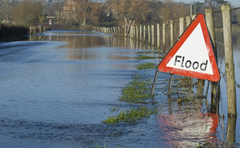
There have been further dramas since, notably the Single Payment crisis, the biblical horrors of 2007 when foot-and-mouth part II, bluetongue, avian flu and flooding hit the industry within a few months, plus the relentless agony of bovine TB.

But Mr Macdonald believes he is now leaving just when things are beginning to look up.

“You can argue that getting out now is rewarding or that I am mug because I am leaving when it is getting good again,” he says. “It’s been a rocky 15 years to put it mildly. I marvel at the resilience of farming to go through that.”

While he stresses there is ‘still along way to go’, he notes, in particular, how political thinking about the importance of food production has gone ‘full circle’ since he joined the NFU in the late 1970s.

He also cites Hilary Benn’s decision to opt for a voluntary policy to replace set-aside in England as being ‘hugely significant’ in this context and in the long-running debate about environmental regulation versus voluntary initiatives.

Mr Macdonald is also confident he leaves the NFU in ‘good heart’ as it embarks on its second century, he says.

He describes the move from London to Stoneleigh in 2006 as the ‘best thing to happen to the NFU’, which he says is also ‘financially strong, a powerful lobbying presence and has great staff and an outstanding president’.

“It would be wrong and conceited to say ‘me, me, me’ because all I am is top of a great tree and a great team. I am immensely proud of the strong sense of commitment and team spirit in this place.

“There is no doubt, a big part of the NFU’s high regard at the moment is down to (president) Peter Kendall. I absolutely recognise I am a foot soldier compared to all of this.”

Travelling

He admits it will be an ‘extremely odd’ feeling to wake up later this month freed of his responsibilities. Which is why the first thing he and his wife, Sue, will do is jump on a plane bound for Western Australia for a two-month break. “I am leaving the country because I will need to,” he says.

Although leaving the NFU, Richard is not leaving the industry altogether. He will be taking up ‘two or three’ non-executive roles in farming next year, including becoming a trustee of Farm Africa, but promises he has ‘no intention’ of doing another full-time chief executive job.

Instead he wants to catch up on some ‘family and leisure time’, including playing some sport and getting fit.

“But I will miss it terribly. I have got hundreds of friends and have had many good laughs. I don’t know how I will cope - or my wife. She was part-time but now she’s now planning to go full-time!” he says.

The NFU will, of course, go on with a new director general, Kevin Roberts, at the helm. Mr Macdonald’s advice to him is simple. “Enjoy it and rely on the team.”

Since he joined the NFU, Richard Macdonald has experienced 13 Agriculture Ministers and Secretaries of State and seven NFU presidents.

Come and gone in his time

Agriculture Ministers/ Secretaries of State

  • John Silkin
  • Peter Walker
  • Michael Joplin
  • John MacGregor
  • John Gummer
  • Gillian Shepherd
  • William Waldergrave
  • Douglas Hogg
  • Jack Cunningham
  • Nick Brown
  • Margaret Beckett
  • David Miliband
  • Hilary Benn

NFU presidents

  • Henry Plumb
  • Richard Butler
  • Simon Gourlay
  • David Naish
  • Ben Gill
  • Tim Bennett
  • Peter Kendall

Readers' comments (1)

  • We can produce various athletic shoes, recreational shoe, stogy, mainly Nike, adidas, timberland, gucci,prada, Luie Vuitton and puma shoes . We can provide Nike Jordan series, Airmax and Shox series.For example: nike air max 95, airmax 97,airmax 2003, shox TL, shox R4,Shox NZ, Air force one(AF1),Dunk, Kobe,James, Jordan I-XX. All the shoes are packed in original boxes with retro cards, and the tags and style code number are 100%
    www.tradertrade.com

    Unsuitable or offensive? Report this comment

Have your say

Mandatory
Mandatory
Mandatory
Mandatory